Thursday, November 7, 2013

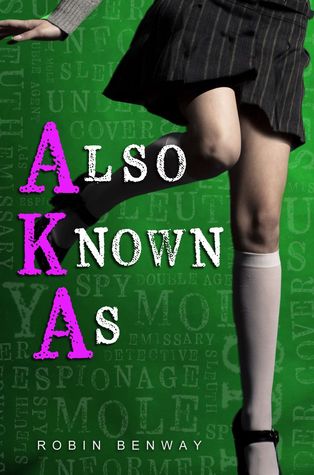
Also Known As, Robin Benway

Also Known AsI cracked my first lock when I was three. I know that sounds like I'm bragging, but really, it wasn't that hard.

"Being a 16-year-old safecracker and active-duty daughter of international spies has its moments, good and bad. Pros: Seeing the world one crime-solving adventure at a time. Having parents with super cool jobs. Cons: Never staying in one place long enough to have friends or a boyfriend. But for Maggie Silver, the biggest perk of all has been avoiding high school and the accompanying cliques, bad lunches, and frustratingly simple locker combinations. Then Maggie and her parents are sent to New York for her first solo assignment, and all of that changes. She'll need to attend a private school, avoid the temptation to hack the school's security system, and befriend one aggravatingly cute Jesse Oliver to gain the essential information she needs to crack the case . . . all while trying not to blow her cover."

Also Known As is another one of those books that I have really mixed feelings about. One the hand, it was a fairly fast-paced book with action, but on the other, as soon as you stop to really think about the book, the whole thing kind of falls apart. I mean, the characters are thinly developed, and the mysterious spy organization they work for even less so. The book is also really predictable, and while it seemed to get some of the spy aspects right, others didn't work well at all for me.

That said, AKA is a fun and funny read; it's good entertainment, and the main character can be humorous at times, with her sarcasm and rueful reflection. The teenage characters in the novel are also pretty realistic in terms of their interactions, even if they weren't fleshed quite enough. Maggie's family did not, however, seem like spies; I just couldn't buy it, probably because there was so little information about the organization that they work for that it all felt very forced. Most of the spy details rung true, mainly about real spies being super "beige"; that is, blending in with the crowd, rather than wearing trench coats and dark glasses and all of that. I enjoyed the descriptions of Maggie picking locks, but the password hacking did not seem realistic at all. I seriously doubt that many people use passwords like their kid's names or their date of birth anymore, considering that practically every website ever warns you not to do that. That little detail nagged at me, and it was so annoying. I would've liked some actual info about how to hack accounts rather than Maggie just being able to do it. 

The other children's spy/detective books I've read recently are the two Ruby Redfort books, which are more humorous but way less realistic. Unlike Maggie and her fellow spies, Ruby and the secret agency Spectrum have all sorts of utterly implausible gadgets. Ruby Redfort is kind of fantastical; AKA is grounded in realism. Although I will say that the mission Maggie is assigned hardly seems like a real thing. The book also isn't very thrilling, which you might expect of a spy novel. It's very ordinary, and kind of formulaic.

Of course there had to be romance in the book, and that I didn't like much. I did, however, like the rapport between Jesse and Maggie, and Maggie and her new-found friend Roux. And the book raised interesting questions in terms of Maggie struggling to actually not get attached to the people at the school. 

Basically, Also Known As is good for an afternoon of fun and entertainment. Just try not to analyze it too much. The reading level was a bit lower than I was expecting, but not too bad. And Maggie was a fairly intelligent and interesting character. It's not a book I would recommending buying though; I was glad that I checked it out of the library, as it's not a book I would want to reread.


308 pages. 

Rating: ****

Tuesday, November 5, 2013

Recent DNF Books

These are books that I recently (within the past few months) didn't finish, and books that I didn't read enough of to write a review. I did want to mention them on the blog, though.

The Bookman's Tale, Charlie Lovett: I had high hopes for this one, but alas I couldn't finish this one; I got to page 50. The story was very interesting, but the writing just wasn't good enough to keep me reading. Ah well. Date put down: August 4th.
The Bookman's Tale by Charlie Lovett

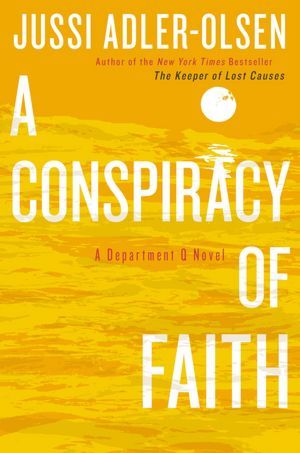
A Conspiracy of Faith, Jussi Adler-Olsen: Dutton sent me a copy of this mystery rather unexpectedly, but for whatever reason I didn't feel like reading it. Date (finally) put down: August 19th.
A Conspiracy of Faith by Jussi Adler-Olsen


Battleborn, Claire Vaye Watkins: I don't know...I just couldn't get into these stories. The prose was lifeless and flat. The few stories I read were uninteresting. It's a shame too, because I am interested in Western fiction. Vastly disappointing. I read about 50 pages before putting it down. Maybe I'll try again later. (Another review copy, incidentally).
Battleborn by Claire Vaye Watkins

The Way of Kings, Brian Sanderson: This wasn't a book I was particularly interested in, but I did happen to win the Goodreads giveaway. Still, not an epic fantasy kind of person. It's only the first book in the series, and it's like 1200 pages long. Meh.
The Way of Kings by Brandon Sanderson

Just One Day, Gayle Forman: Everyone's raved about this book, but I guess I'm just not a fan of straight-up romance. I also felt like the main character made some pretty stupid choices.

Just One Day by Gayle Forman

Stella Bain, Anita Shreve: "I found myself unable to read much of Stella Bain. Given its subject matter, the book felt kind of cold and detached. I only got to page 40 in the ARC, but the book in total is less than 300 pages, and I didn't particularly feel like continuing."

Stella Bain by Anita Shreve

This was a rather weird post, wasn't it? Anyway, just some recent books that I failed to take an interest in.

Monday, November 4, 2013

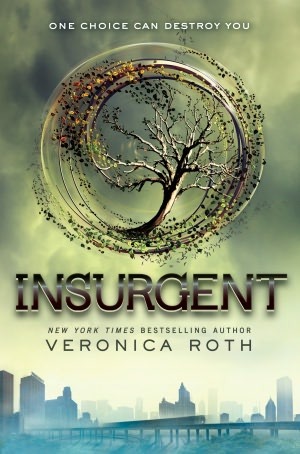
Rereading Insurgent by Veronica Roth

Insurgent (Divergent, #2)I wake with his name in my mouth. Will. Before I open my eyes, I watch him crumple to the pavement again. Dead.

 Plot summary from Amazon: "One choice can transform you—or it can destroy you. But every choice has consequences, and as unrest surges in the factions all around her, Tris Prior must continue trying to save those she loves—and herself—while grappling with haunting questions of grief and forgiveness, identity and loyalty, politics and love. Tris's initiation day should have been marked by celebration and victory with her chosen faction; instead, the day ended with unspeakable horrors. War now looms as conflict between the factions and their ideologies grows. And in times of war, sides must be chosen, secrets will emerge, and choices will become even more irrevocable—and even more powerful. Transformed by her own decisions but also by haunting grief and guilt, radical new discoveries, and shifting relationships, Tris must fully embrace her Divergence, even if she does not know what she may lose by doing so. New York Times bestselling author Veronica Roth's much-anticipated second book of the dystopian Divergent series is another intoxicating thrill ride of a story, rich with hallmark twists, heartbreaks, romance, and powerful insights about human nature."

*Spoilers for Divergent*

I recently reread Divergent in preparation for Allegiant's release, even though it was really Insurgent I couldn't remember much about. Most people would agree that Insurgent is not quite as good as Divergent, but it's still a very suspenseful and absorbing sequel. It's just slightly less relatable, and perhaps a little less suspenseful, even though there's rapid-fire action, and the ending is one giant cliffhanger. It's also at least one hundred pages longer than Divergent, which might have something to do with it. Still, I really love Insurgent, and as second books go, it's a good one.

As well lots of action and storming of compound scenes, Veronica Roth also focuses on the complexity of human relationships. I really love how Tris and Four have a lot of conflicts and tension with one another throughout the book; they don't always agree with one another's choices, and I feel like that's a much more realistic portrayal of romance and love than we often get in young adult fiction, where it's all happily ever after. Roth also attempts to shade in the various aspects of the characters, and she talks very movingly about Tris's extreme guilt at having killed Will while he was being brainwashed. Another part of the book that I really enjoyed was the way Tris is seriously struggling with all of the violence that's going on around her, and the violence that she's perpetrated. Also, she's just lost both of her parents in one day, and her remaining friends are all in danger, so all in all, she's got a lot of issues and it's totally realistic that she's kind of going through some post traumatic stress disorder. As the summary so succinctly puts it, the book is full of "haunting grief and guilt, radical new discoveries, and shifting relationships".

Insurgent might be a bit intoxicating. It's certainly really, really fast-paced in terms of all the new developments. Roth does develop the characters very well, but somehow less so than in Divergent. Perhaps it's because here it's only the subtleties. But those are the little things that make the characters human and flawed and interesting.

 The action in this book is amazing, and there's certainly a lot more of the storming secure fortresses variety than in Divergent, in which Tris is trying to figure out what the heck Divergence is and her feelings about Abnegation and Dauntless. In Insurgent, she still has a lot of figuring out to do, but about different things. Also, a full-scale conflict has erupted, which ultimately, I think, is what really marks the difference between the two books. Just like Divergent though, Insurgent is really enthralling, and very tense.

There are some great scenes with Tobias and Tris; as I said earlier, their relationship is really developed more in Insurgent, and there are moments both fraught with conflict and swoon-worthy ones. This is one of my favorite secondary but still important aspects of the book, although of course the larger conflict is foremost. Several interesting new characters are introduced, and characters from the first book are more fully fleshed out, such as Peter and Edward.

Fans of books full of action might like Insurgent more than Divergent, but both books are amazing in terms of entertainment and how surprisingly smart they are. Rereading the first two books has gotten me super pumped for Allegiant's release; I can't wait to see how Roth finishes off the trilogy (and what is she going to work on next?). There's also a print edition of the novellas from Four's point of view coming out in February.

525 pages.

Rating: *****

Sunday, November 3, 2013

Dancer, Daughter, Traitor, Spy by Elizabeth Kiem

Dancer, Daughter, Traitor, SpyNovember dusk slips into Moscow like a spy; you don't know it's there until it has stolen the day and vanished into the dark. But on the night that my mother disappears from my life, I could swear that I see it happen. The arrival of twilight, I mean - not my mother's disappearance. That's something I don't see coming. Not  until it is too late. Not until she's already gone.

"Marina is born of privilege. Her mother, Sveta, is the Soviet Union's prima ballerina: an international star handpicked by the regime. But Sveta is afflicted with a mysterious second sight and becomes obsessed with exposing a horrific state secret. Then she disappears. Fearing for their lives, Marina and her father defect to Brooklyn. Marina struggles to reestablish herself as a dancer at Juilliard. But her enigmatic partner, Sergei, makes concentration almost impossible, as does the fact that Marina shares her mother's “gift,” and has a vision of her father’s murder at the hands of the Russian crooks and con artists she thought they'd left behind. Now Marina must navigate the web of intrigue surrounding her mother's disappearance, her ability, and exactly whom she can—and can't—trust."

I totally can't remember where I first heard about this book, but as soon as I read the plot description, I was hooked. As it turned out, Dancer Daughter Traitor Spy isn't a great book (I didn't really think it would be), but it is somewhat entertaining and a quick read. It's a blend of mystery, historical fiction, spy novel, thriller, and fantasy. Plus a Russian setting, which sounded like it had the potential to be intriguing. I was actually a bit disappointed by the level of the book. It's marketed as young adult, but it's really short (under 300 pages) and the font is super big. With a plot like this one, the book could have been fleshed out more; however, at least it wasn't overwritten or long-drawn. It was just kind of an easier read than I was expecting, and it was disappointingly both simplified.

Still, as I mentioned, there are some good elements in this book, which gives a nod in its title to Tinker Tailor Soldier Spy, the famous John le Carre Cold War spy novel. It's not nearly as suspenseful though, and it also felt kind of simplistic, as if the author didn't fully have a grasp of the political situation and didn't even try to. As I said, this was mainly because of the level of the book, which was not high. Some parts of the narration and the way that Marina talked offhandedly about her family seemed odd too. 

I kept hoping that the book would come together more, but it was very discombobulated. For example, there is a fantasy element to the novel, but for a lot of the book it's not developed or explained much at all, and only really comes in later. This was not a good technique, as thus the different parts of the book didn't mesh well at all. I'm not quite sure what the author was thinking there. Rather than being a blend of historical fiction, spy novel, and fantasy, the book was more like different sections that were more different genres. And it was never very suspenseful. Still, the story had its points; it just wasn't nearly as good as I was expecting it to be. I was expecting it to be a 4 star read, but it was more like 3 stars. The characters also weren't developed enough for my tastes; I didn't find Marina or any of her relatives all that convincing. The fantasy element could have been taken out and not that much would have been missed.

It often happens that books either get better or worse when the setting changes, and such was the case here. The book definitely picked up at least a little bit once Marina and her father arrive in New York. Although the fantasy element still isn't incorporated enough, there are some new characters that Marina meets, and her initial plunge into America was the most interesting part of Dancer Daughter Traitor Spy. She wants to keep dancing, but it's difficult since she's undercover in terms of her identity and she doesn't speak much English.

Dancer Daughter Traitor Spy is a really short book, and it's a pretty fast read. It wasn't great or anything, but it had an interesting premise, and is worth reading if the plot sounds particularly interesting. I am glad that I checked it out of the library though, as I'm certainly not going to be rereading this one.

264 pages.

Rating: ***

Saturday, November 2, 2013

The Probability of Miracles, Wendy Wunder

The Probability of MiraclesWhen Campbell's father died, he left her $1,262.56- as much as he'd been able to sock away during his twenty-year gig as a fire dancer for the "Spirit of Aloha" show at Disney's Polynesian hotel.

"Dry, sarcastic, sixteen-year-old Cam Cooper has spent the last seven years in and out hospitals. The last thing she wants to doe, Maine - a place known for the miraculous events that occur there. B in the short life she has left is move 1,500 miles away to Promisut it's undeniable that strange things happen in Promise: everlasting sunsets; purple dandelions; flamingoes in the frigid Atlantic; an elusive boy named Asher; and finally, a mysterious envelope containing a list of things for Cam to do before she dies. As Cam checks each item off the list, she finally learns to believe - in love, in herself, and even in miracles."

The Probability of Miracles wasn't a very realistic book about cancer, as you can probably (ha) tell from the title, but I did enjoy it, and it's certainly a feel-good read, with a very sad ending. The Fault in Our Stars is the more realistic and heartbreaking "cancer book", but Wendy Wunder's debut novel had its points too. I enjoyed the writing, which was easy to get into, and the dry humor that pervaded the book, mainly coming from the main character, Cam. She was an interesting mix; some parts of her were really appealing, such as her wry humor, cynicism, belief in rationality, and fairly clear-eyed view of things. However, she was also kind of cruel and irresponsible: one of the things on her flamingo list was to "kill her little sister's dreams". Others included shoplifting, and having her heart broken. Really? It was kind of odd, but you can't really blame her, though; after all, she's ostensibly about to die, and she wants to experience all of the things she thinks she's supposed to experience in life. But that's of course where the miracles come in, although a bit differently than one might expect.

There were some bizarre but funny parts of the book, such as the pervasive flamingos and the hijinks Cam gets up to both in Promise and before she gets there. I find it kind of unrealistic that she would get away with stealing some lip balm when in fact the person working there saw her take it, but she does. It's not quite so easy with the plastic flamingo, however. 

Parts of the book were pretty predictable, such as the whole thing with Tweety (no major spoilers). However, I was fairly certain that Tweety wouldn't stay lost, because hey, this is a book all about miracles and unexpected circumstances. There were also a couple of typical YA elements, and the storylines of this book and many other YA books (even ones that don't deal with cancer) could be blurred and confused very easily. Unlike The Fault in Our Stars. (Alright, stop comparing this book with a John Green novel. Nothing else young adult can compare to a John Green novel). Anyway, a part of the book that kind of redeemed it was its quirkiness; the beginning is set in Florida and there's all this bizarre Disney-related stuff. Sometimes it was a bit too much, but that and the flamingos made the book more distinctive than it would have been otherwise. It was overall a pretty beautiful story, and Cam was interesting character, although not as developed as I would have liked.

The Probability of Miracles reminded me a bit of The Running Dream, in that both are unrealistically optimistic and feel-good for the most part, but still moving all the same. There are really sad parts of the story though, and really touching sequences, and the ending was certainly different than what I was expecting.

The Probability of Miracles was a lovely story, and in spite of everything, I really related to Cam, perhaps a bit more than Hazel. It's a book full of feeling and discovery, and it does get under your skin and do things to your emotion, if not as much as other books whose titles will not be mentioned.

357 pages.

Rating: ****

Thursday, October 31, 2013

Rereading Divergent by Veronica Roth

Divergent (Divergent, #1)There is one mirror in my house. It is behind a sliding panel in the hallway upstairs. Our faction allows me to stand in front of it on the second day of every third month, the day my mother cuts my hair. 

"In Beatrice Prior's dystopian Chicago world, society is divided into five factions, each dedicated to the cultivation of a particular virtue--Candor (the honest), Abnegation (the selfless), Dauntless (the brave), Amity (the peaceful), and Erudite (the intelligent). On an appointed day of every year, all sixteen-year-olds must select the faction to which they will devote the rest of their lives. For Beatrice, the decision is between staying with her family and being who she really is--she can't have both. So she makes a choice that surprises everyone, including herself. During the highly competitive initiation that follows, Beatrice renames herself Tris and struggles alongside her fellow initiates to live out the choice they have made. Together they must undergo extreme physical tests of endurance and intense psychological simulations, some with devastating consequences. As initiation transforms them all, Tris must determine who her friends really are--and where, exactly, a romance with a sometimes fascinating, sometimes exasperating boy fits into the life she's chosen. But Tris also has a secret, one she's kept hidden from everyone because she's been warned it can mean death. And as she discovers unrest and growing conflict that threaten to unravel her seemingly perfect society, Tris also learns that her secret might help her save the ones she loves . . . or it might destroy her."

This is the third time I've read Divergent, once in February 2012, and again in August 2012. I remembered it pretty well, but I wanted to reread both Divergent and Insurgent in preparation for Allegiant's release on (review coming soon). You can read my original review here, but be warned: it's not very good. Divergent, however, is an excellent book, not wholly unique in its genre, but with just enough originality to make it totally worth reading (if you haven't read it already). The characters aren't particularly likable, but that's part of its uniqueness; Tris, Four, and the other characters all have really ugly sides that all too often shine through. 

Veronica Roth builds unease so, so well. I remember the first time I read Divergent I thought to myself that this society wasn't too bad or dystopian, even if it was a bit misguided. But that all changes as soon as Tris becomes a Dauntless initiate. The ugliness of Dauntless is revealed, how there are those in Dauntless who believe that bravery means never, ever giving up or admitting defeat. To someone like Four, however, bravery is acknowledging the strength of others. Tris is also grappling with what the definitions of bravery and selflessness are, and whether she can reconcile both within her or have to push one away. Because despite giving up Abnegation, at least in Divergent, there's still a lot of that girl in her. But her ugly side is also revealed through this: she's struggling to push away her Abnegation tendencies, and often swings to the other extreme, not wanting to help people at all. This, I think, is what makes Divergent such a marvelous book. Not only it is a real page-turner, and wildly entertaining, but the characters also think rather than just doing things. It's a perfect balance of thoughtfulness and action, and Divergent is definitely one of my favorite books. 

The world in Divergent is also really, really compelling and easy to relate to. Each faction believes that problems are caused by different things, by selfishness, ignorance, violence, dishonesty, and by cowardice. I think all of them have the right idea, but that strife is caused by all of these things, not just one. And that's where the factions have gone wrong in their ideology. Now the factions' fairly admirable goals and manifestos are also being changed into something darker, such as with Erudite and Dauntless. Factions can take advantage of their supposed characteristics; Peter, formerly from Candor, used to beat up people and lie about it. And everyone would believe him, because Candor people are supposed to never tell a lie. Tris comes of age in a world dark with conflict, and she has a dangerous quality - Divergence. Veronica Roth tells you just enough tantalizing information about Divergence to keep you reading, and Tris's story is masterfully told. 

And you know what? I love the romance too. Sometimes I hated Four, sometimes Tris, because they are two deeply flawed people, but I really loved how it was developed, not instantly or anything. And, thank God, no real love triangle (there's Al, but that doesn't really count). Tris and Four are in conflict a lot throughout the book, and that feeds the story. Plus, the romance is only one of many aspects of the book; it's not overemphasized, which is realistic, since Tris has a lot going on in her life: she's trying to make new friends, reconcile her conflicting choices and feelings, think about her family, stay in Dauntless, and find out what exactly Erudite is up to. She can't be constantly worrying about Four. 

All of the characters in Divergent are amazingly portrayed, their feelings and their conflicts, and Veronica Roth also writes really incisively about the dystopian society she's created and each of the factions. In Divergent, Amity and Candor aren't fully fleshed out, but rest assured, they will be in Insurgent. And who knows what will happen in Allegiant, which I'm super excited for. 

487 pages. 

Rating: *****

Wednesday, October 30, 2013

The Golem and the Jinni, Helene Wecker

The Golem and the JinniThe Golem's life began in the hold of a steamship. The year was 1899; the ship was the Baltika, crossing from Danzig to New York. The Golem's master, a man named Otto Rotfeld, had smuggled her aboard in a crate and hidden her among the luggage.

"Chava is a golem, a creature made of clay, brought to life by a disgraced rabbi who dabbles in dark Kabbalistic magic. When her master, the husband who commissioned her, dies at sea on the voyage from Poland, she is unmoored and adrift as the ship arrives in New York in 1899. Ahmad is a djinni, a being of fire, born in the ancient Syrian desert. Trapped in an old copper flask by a Bedouin wizard centuries ago, he is released accidentally by a tinsmith in a Lower Manhattan shop. Though he is no longer imprisoned, Ahmad is not entirely free – an unbreakable band of iron binds him to the physical world. The Golem & The Jinni is their magical, unforgettable story; unlikely friends whose tenuous attachment challenges their opposing natures – until the night a terrifying incident drives them back into their separate worlds. But a powerful threat will soon bring Chava and Ahmad together again, challenging their existence and forcing them to make a fateful choice."

This was such a great, intriguing fantasy novel, full of lyrical descriptions and great turn-of-the-century historical detail. Wecker really conjured up, much like a jinni, sensory descriptions of New York City and of the Arabian desert a thousand years earlier, where the jinni was trapped before being accidentally released in 1899 New York. This book's been on my stack for a while now, and I really wish I'd read it sooner. I'm not sure why I didn't, really, because as soon as I picked it up in the bookstore (having never heard of it before) the story drew me in immediately and I quickly read the first couple of chapters. Yet once I bought it it took me several months to actually start reading the book. It might be because of its heft; it does seem somewhat forbidding and gilt-adorned. It's not really that long of a book though, and it's just so atmospheric.

I loved the fact that the golem was female; that's a bit unusual, as in the traditional golem stories, it's generally a male. She was a great character, and so was the jinni. They're from totally different parts of the world, but they both end up in the great melting pot - New York. Speaking of which, New York was described so well; the sights and sounds and smells of a big, bustling, dirty, and vibrant city right at the end of one century and the beginning of the next. The book seemed pretty historically accurate, and the author must have done quite a lot of research when she wrote about the various neighborhoods of New York and the tradespeople.

The book itself was physically beautiful, with lovely jacket paper, gilt, and dark blue pages on the outside (I'm not sure what the actual term for that is). This added to the experience of reading this immersing book. It's one of those books that draw you in so that without even realizing it, you've read a lot of pages and can't let go. I was entranced and enchanted by this story, and I wanted to find out how the golem and the jinni would eventually meet.

The Golem and the Jinni also talks a little about class distinctions and divides; one of the main characters is Sophia Winston, a dissatisfied young socialite. She was perhaps a bit of a stereotype, an archetype that's repeated over and over: the rich young woman who seeks adventure. But perhaps that portrayal is common simply because it is very compelling and relatable.

There are so many threads of the book which are woven so skillfully; many of the supporting characters have complicated backstories. There's the owner of the coffee house which is the center of Little Syria, there's an ice cream marker with a tragic, cursed past, the kindly rabbi who takes in the golem, and more. Each of them has their own narrative which is delved into, and the author brought it all together very well. I do wish, though, that the golem and the jinni had met earlier; it's at around page 170 that their two lives finally collide, and that could have happened before. Still, the once the narrative really gets going, it's a page-turner, and there are so many amazing parts to the story, parts that you don't even realize are connected until the masterful finish.

I loved this book, and would highly, highly recommend it to fans of historical fiction, and rich, multi-faceted fantasy. Read other reviews here and here.

484 pages.

Rating: *****