Thursday, September 12, 2013

All We Know: Three Lives, Lisa Cohen

All We Know: Three LivesFor five decades, Esther Murphy built a wall of words around herself. A profusely erudite New York intellectual of the first half of the twentieth century, she talked and talked, dazzling her listeners with her vast memory, her extravagant verbal style, and her inventive renderings of the past - and driving them to despair with her inability to finish the books she was contracted to write, biographies of remarkable women in history.

"A revelatory biography of three glamorous, complex, modern women. Esther Murphy was a brilliant New York intellectual who dazzled friends and strangers with an unstoppable flow of conversation. But she never finished the books she was contracted to write—a painful failure and yet a kind of achievement. The quintessential fan, Mercedes de Acosta had intimate friendships with the legendary actresses and dancers of the twentieth century. Her ephemeral legacy is the thousands of objects she collected to preserve the memory of those performers and to document her own feelings. An icon of haute couture and a fashion editor of British Vogue, Madge Garland held influential views on dress that drew on her feminism, her ideas about modernity, and her love of women. Existing both vividly and invisibly at the center of culture, she—like Murphy and de Acosta—is now almost completely forgotten. In All We Know, Lisa Cohen describes these women’s glamorous choices, complicated failures, and controversial personal lives with lyricism and empathy. At once a series of intimate portraits and a startling investigation into style, celebrity, sexuality, and the genre of biography itself, All We Know explores a hidden history of modernism and pays tribute to three compelling lives."

Although kind of interesting, All We Know wasn't ultimately the best biography/historical expose that I've read in a while, and I didn't read the whole thing. All We Know, The Girl Who Loved Camellias, and Eighty Days all deal with influential but almost forgotten women of different historical periods. And I think I liked them in reverse order of the way they're listed. Nevertheless, the part of All We Know that I read was okay, and the way that Cohen chose to format the biography was well done. 

Esther Murphy, Mercedes de Acosta, and Madge Garland were very different women, but they were connected in so many ways; for one, they all knew one another, even though they traveled in varied circles. Each woman has a unique story, and each is wholly forgotten in the 21st century. They aren't really, really important, but each of them hobnobbed with some pretty famous people, and Esther herself was well known at the time for her knowledge and fondness of talking. 

An annoying thing is that the plot summary provided by the publisher doesn't actually mention one of the key points of the book: that all three women were lesbian. And that is really, really important to the world that the book portrays, and to the lives that it attempts to illuminate. This was a time when homosexuality was feared, reviled, shunned, and sometimes illegal, and all three of these compelling women were struggling with that in their different ways. Yes, there's Madge Garland's "love of women", but that could mean anything, really; it's not clear at all. Still, I suppose it can be inferred, but it should have been made a bit clearer. 

Esther was incredibly intelligent, full of knowledge and constantly testing authority. She was first enrolled at a Catholic school, but left after she challenged the nuns with the paradox of the stone, about God's omnipotence. See what I mean? 

The writing, however, was really dense, and I didn't end up finishing the book. I'll come back to it later, and perhaps enjoy it more. Still, it was one of the New York Times's 100 Best Books of 2012, so I'm definitely going to hang onto it for another time, trusting that it's somewhat worthwhile. I also have a signed copy, so...

358 pages. 

DNF

Wednesday, September 11, 2013

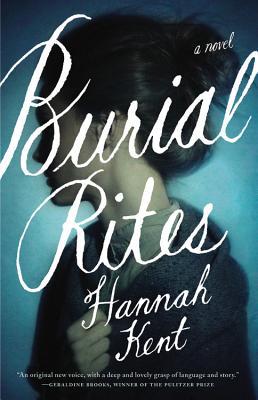
Burial Rites, Hannah Kent

Burial RitesThey said I must die. They said I stole the breath from men, and now they must steal mine.

"A brilliant literary debut, inspired by a true story: the final days of a young woman accused of murder in Iceland in 1829. Set against Iceland's stark landscape, Hannah Kent brings to vivid life the story of Agnes, who, charged with the brutal murder of her former master, is sent to an isolated farm to await execution. Horrified at the prospect of housing a convicted murderer, the family at first avoids Agnes. Only Tóti, a priest Agnes has mysteriously chosen to be her spiritual guardian, seeks to understand her. But as Agnes's death looms, the farmer's wife and their daughters learn there is another side to the sensational story they've heard."

I won a copy of this book via a Goodreads giveaway from Little, Brown. It was one I wasn't that interested in, but I nevertheless liked it, and I was glad that I had won the giveaway. It's kind of part of that new phenomenon: the literary crime novel. 

Iceland is an interesting country, and though I'm not sure how historically accurate Bural Rites was, the world of nineteenth century Iceland was described well, with its harshness and its beautiful landscape. The book was easy to get into, with a nice layout at least in the ARC. I liked the cover too. Within sections, there are breaks in the text to switch narration from third person to Agnes's point of view. It was a bit odd at first, but not that confusing as the switch was pretty clear. It definitely helped the book's crafting to have multiple narrations; one can sympathize with all of the characters: the family who is forced to take Agnes in is horrified, terrified, and rightly so. She is a murderess, after all. But obviously there was some provocation, obviously she is a complex human being, and the family that takes her in just can't see that. After all, they've heard an awful story of murder. 

Burial Rites was pretty predictable; I was pretty sure I knew basically why those two men (who were by no means good people) were killed, and I was for the most part right. I don't think anyone deserves to die, and murder is murder, but still...It's something I talked about briefly in my review of Agatha Christie's Murder on the Orient Express. Does the character of the person who was murdered count for how harsh the punishment be? It shouldn't really; it's entirely subjective, and in the eyes of law and fact, the murder of a bad and a good person is just the same. That's kind of one of the issues in Burial Rites too; more of an issue is what is going to happen to Agnes, and whether she'll ever be accepted by the family that she's staying with before her inevitable execution. 

I liked Burial Rites, but truth be told, I don't have a whole lot to say about it. Let's see...it's an enjoyable read, although it wasn't that thought-provoking. I mainly liked it for its description and evocative setting of Iceland. The author herself is not Icelandic though; she's Australian, which seemed a bit odd. I would hope that she's at least spent some time in Iceland to really get a feel for the country. It's hard to write a novel otherwise. You can do all the research you want, but actually being in the place is super important. 

Burial Rites had interesting characters who were actually complex, fleshed-out people; no one's strictly bad or strictly good. Margret, the farmer's wife, treats Agnes very badly, but she's just worried about her daughters' safety, as well as her own. It's understandable, although it strikes me that being cruel to a murderess is not really a good way to ensure that she doesn't murder you. There might be some flawed logic there. 

The first half of the book was definitely better than the second; nothing much seemed to happen in the second, and I didn't like the ending at all. 

Burial Rites was a well-written and fairly absorbing historical novel. I was happy to receive an ARC. 

314 pages (in the ARC).

Rating: ***

Tuesday, September 10, 2013

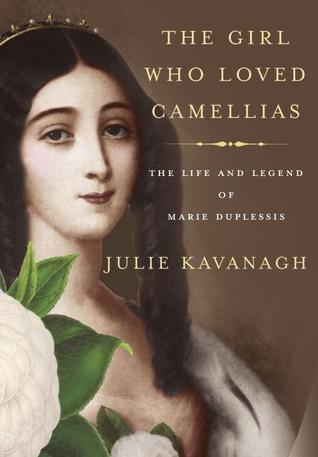
The Girl Who Loved Camellias: The Life and Legend of Marie Duplessis, Julie Kavanagh

The Girl Who Loved Camellias: The Life and Legend of Marie DuplessisMarie Duplessis was the most admired young courtesan of 1840's Paris. A peasant girl from Normandy, she had reinvented herself in a matter of months, changing her name and learning how to  dress, speak, and act like a duchess. 

"The little known, riveting story of the most famous courtesan of her time: muse and mistress of Alexandre Dumas fils and Franz Liszt, the inspiration for Dumas's The Lady of the Camellias and Verdi's La Traviata, one of the most sought after, adored women of 1840s Paris. Born in 1824 in Normandy, Marie Duplessis fled her brutal peasant father (who forced her to live with a man many years her senior). Julie Kavanagh traces Marie's reinvention in Paris at sixteen: as shop girl, kept woman, and finally, as grand courtesan with the clothes, apartment, coach and horses that an aristocratic woman of the time would have had. Tall, willowy, with dramatic dark hair, Marie acquired an aristocratic mien, but coupled with a singular modesty and grace, she was an irresistible figure to men and women alike. Kavanagh brings her to life on the page against a brilliantly evoked background of 1840s Paris: the theater and opera, the best tables at the cafés frequented by society figures, theater directors, writers, artists--and Marie, only nineteen, at the center of it all. Four years later, at twenty-three, she would be dead of tuberculosis."

Wow. This was a great biography of the courtesan who inspired The Lady of the Camellias and La Traviata. I read the biography right after reading the original novel, and that was a good choice. I was already immersed in the fictional world of Marguerite and Armand, and then I started reading about the actual woman, who was not quite as exalted as Dumas-fil's tragic heroine who sacrifices her chance at redemption. No, Marie Duplessis in the flesh was much harder than Dumas-fil's Marguerite or Verdi's Violetta. 

Kavanagh writes really well; I was thinking about skipping the introduction, but it wasn't dry and uninteresting like introductions can sometimes be. On the contrary, I was immediately drawn into this compelling and fascinating story. It's pretty easy to get into, and Marie is a character one can easily sympathize with, fleeing from her awful circumstances and making a better life for herself. Her basic, basic story in terms of upbringing could be compared to Maude in Belle Epoque, but while Maude becomes a repoussoir, Marie became a courtesan, a high-class prostitute. And many influential men were her lovers, among them the composer Liszt, the director of the Paris Opera, and of course, Dumas-fils himself. 

The book was engaging and very easy to get into; I was pleasantly surprised by the quality of the writing and the way this excellent biography was crafted. Kavanaugh provides a lot of detail, and the book seems to be meticulously well-researched. She describes how Marie's parents met, and how it quickly turned out that her father was a brute without straying too far from her subject. There's lush description too, and at times the book almost reads like a novel, as if Kavanaugh herself was transported back to the 1840's to witness Marie's life. It feels as if the reader has been taken back too. I could almost picture the sights and smells, particularly of Marie's early life and the time she lived with her kind-hearted cousins in the country. The whole first chapter of the book is in fact devoted to Marie (or Alphonsine's) early life before she arrived in Paris. It ends with her in Paris having "tangible proof of the luxuries her beauty could buy." In this first case, fried potatoes. Later, she convinces a young student to buy her some cherries. Marie's first time in Paris was spent in the Latin Quarter, where there were lots of students living cheaply. 

Kavanagh writes for an intelligent and well-educated audience; there are some terms that she assumes the reader knows, and I liked that. She also does some reasonable interpreting while still sticking to the facts and not indulging in speculation. Often biographers tend to get carried away with an adoration or obsession with their subject; not so here because Marie was a complicated character, deeply flawed, at once sympathetic and very alien to the modern world. 

This was an excellent biography, and I definitely learned a lot. I read it comparatively quickly for a nonfiction book; it wasn't overwritten or boring reading at all. Definitely recommended. I received a review copy from Knopf. 

233 pages. 

Rating: ****

Monday, September 9, 2013

The Lady of the Camellias, Alexandre Dumas-fils (translated by Liesl Schillinger)

16171265It is my opinion that you cannot create a convincing character until you have made a broad study of human nature, just as you cannot speak a foreign language until you have studied it thoroughly. Not having reached an age at which I consider myself qualified to invent a character, I content myself with simply describing one.

"The landmark novel that inspired Verdi’s opera La Traviata,in a sparkling new translation published to coincide with a major new biography of the real-life “Lady of the Camellias. One of the greatest love stories of all time and the inspiration for Verdi’s opera La Traviata and the Oscar-winning musical Moulin Rouge!The Lady of the Camellias tells the story of Marguerite Gautier, the most beautiful, brazen, and expensive courtesan in all of Paris. Known to all as “the Lady of the Camellias” because she is never seen without her favorite flowers, she leads a glittering life of endless parties and aristocratic balls, with the richest men in France flocking to her boudoir to lay their fortunes at her feet. But despite having many lovers, she has never really loved—until she meets Armand Duval, young, handsome, and from a lower social class, and yet hopelessly in love with Marguerite."

I recently saw Verdi's beautiful opera La Traviata (The Fallen Woman) for the second time, and I wanted to read the novel it was based on as well as the new biography (review tomorrow). Liel Schillinger's translation purports to be closer in tone to the original French, and I was excited for that. That said, the book was still kind of overwritten at points; however, it wasn't too bad in terms of the writing. It was also a very moving story, and despite its deeply tragic nature, there were flashes of humor in the book; humor at Marguerite's situation, and humor at the rich society ladies who flock to her apartment after she's dead to look at all her goods. When she was alive, they would have never even deigned to talk to her, but after death, her jewels and furniture proves too much to resist. 

Obviously, I haven't read the original text, but this translation seemed to be fairly true; it was open, honest, and didn't shrink away from describing Marguerite, the "most beautiful, brazen, and expensive courtesan in all Paris" or the wild parties that she threw and attended. The text wasn't totally modernized, but neither did it employ the flowery phrases that other translations have (I looked at a few of them online, and it was pretty awful). Liesl Schillinger has done an admirable job, I think, and I would recommend this particular edition. It has a lovely cover too. The only other really worthwhile one is, I think, probably the Oxford World Classics edition. 

Alexandre Dumas-fils was the famous Alexandre Dumas's son, but his work, or at least The Lady of the Camellias differs greatly from The Three Musketeers. It is a deeply romantic and tragic story, though also somewhat cynical; in the beginning, there is great emphasis on those who flock to Maguerite's home after she is dead. It makes our narrator very angry. 

Dumas-fils is prone to moralizing and postulating a bit at the end of some chapters; I really didn't like that. It took away from the story and his ponderings were mostly uninteresting, although very typically Victorian. The story itself, however, was well told; towards the beginning of the book, I found one passage particularly moving. The narrator is talking with the caretaker of the cemetery Marguerite is buried in, and he says that he loves her most of all, more than the graves of the rich whose relatives never come (another condemning of the hypocritical wealthy, you'll notice). Then he adds, "People like me, sir, are forced to love the dead, because we're so busy that we hardly have time to love anything else." (pg. 33). It was a really moving chapter of the novel. 

 The character of Armand Duval is of course based on Dumas-fils himself, and the actual narrator of The Lady of the Camellias serves to make observations and listen to Armand's tale. The narrator knew Marguerite only by sight, but he is a good man, and is very grieved to hear of her death, even more so when Armand eventually tells him the sad tale. This takes a while to get to, but the book isn't boring before then; there is talk of the auction to appease her creditors, the narrator meets Armand, there is the awful transfer of her coffin, and Armand briefly falls terribly ill of brain fever before miraculously recovering. His story begins on page 43, but it feels like longer than that in some ways. That's where the story truly begins; the rest is just a prologue, an introduction, although an entertaining one. Certainly, no part of the story is boring. I was surprised at how candid and frank the writing was; Dumas-fils doesn't shirk away from describing the life of a kept woman. 

There were many stirring descriptions and images in the book of the sadness hidden underneath the life that Marguerite lives, of how she has to leave the room coughing blood at one of her wild parties, of how no one visits her when she falls ill, but when she's well, everyone flocks to her. Armand is the only one who cares more deeply for her, coming to see her when she's well and when she's sick.

The Lady of the Camellias is a beautiful novel, romantic and tragic. It should be better known in its own right, because it's a great story and well-written. I would highly recommend it. 

I received a copy of this book from Penguin.

206 pages. 

Rating: ****

Sunday, September 8, 2013

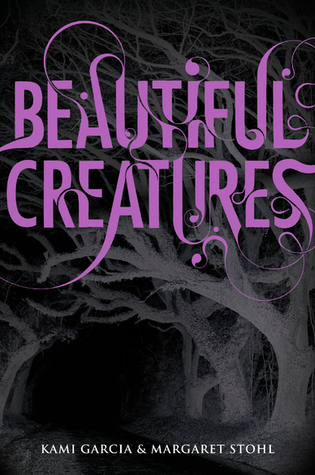
Beautiful Creatures, Kami Garcia & Margaret Stohl

Beautiful Creatures (Caster Chronicles, #1)There were only two kinds of people in our town. "The stupid and the stuck," my father had affectionately classified our neighbors. "The ones who are bound to stay or too dumb to go. Everyone else finds a way out." There was no question which one he was, but I'd never had the courage to ask why.

"Lena Duchannes is unlike anyone the small Southern town of Gatlin has ever seen, and she's struggling to conceal her power and a curse that has haunted her family for generations. But even within the overgrown gardens, murky swamps and crumbling graveyards of the forgotten South, a secret cannot stay hidden forever. Ethan Wate, who has been counting the months until he can escape from Gatlin, is haunted by dreams of a beautiful girl he has never met. When Lena moves into the town's oldest and most infamous plantation, Ethan is inexplicably drawn to her and determined to uncover the connection between them. In a town with no surprises, one secret could change everything."

Beautiful Creatures is a very interesting book. It's at once very junky, typical YA-paranormal fare, and also very engrossing, suspenseful, and fascinating. I picked it up once a few years ago, but for whatever reason, put it down again. I shouldn't have. Despite the fact that perhaps the descriptions aren't very good and that Gatlin is the cliche of the Southern town, it's difficult to put this rather long book down. I had also seen part of the recently released movie while on a flight. And I have to say, it was pretty absorbing. Even though I kind of already knew what would happened, I wanted to read on. I figured out that I got to page 180 the first time, because I did definitely remember Ridley, Lena's older cousin who went dark, and is a Siren.

The criticism that everyone seems to have of the book: I don't know what a teenage boy's inner monologue sounds like, but I'm pretty sure it's not like Ethan's narration. At all. Based on the guys my age I've talked to, that is not what they sound like and what is going on their brain. However, I found that I simply didn't care as I was reading the book. It was too gripping. I'm kind of worried Twilight (when I finally get around to it) is going to be like that too.

The book is pretty long for a YA book, 563 pages, and I think it was a little dense in the middle and heavily plotted. Still, there was a lot of great background information, and that I really liked. I didn't quite understand why so many people absolutely hated it; yes, there were cliches, yes, Ethan's narration was unrealistic, but the story was entertaining and suspenseful. And yes, I seriously doubt that a town as bigoted, racist, and nasty as Gatlin exists in the 21st century, but it's possible. There are still some pretty crazy people out there. Speaking of that, I think Beautiful Creatures would have been more aptly set in, I don't know, the 60's or 70's or maybe the '80's. The 21st century setting really didn't seem to serve any purpose, other than the fact that Ethan has an iPod, on which the mysterious song Sixteen Moons appears. Making it set in the present makes the story and Lena's world seem even more alien. How could it possibly exist in the modern, clean, rational world of the 2000's? That's why making it set in the South was probably a good move. That said, there are plenty of smart people in the South, which Ethan doesn't seem to get. Maybe because the people in Gatlin are such idiots. But the South has given birth to so many excellent writers: Flannery O'Conner, Harper Lee, Margaret Mitchell, Eudora Welty, to name a few. All women, interestingly enough. Just like in any part of the country, there are smart people, and there are idiots, bigots, and racist people. Just perhaps more of the latter. ;) But really, there are lots of intelligent people living in the South.

Anyway, this is definitely a guilty pleasure for me, because if I look at the book, I can't possibly find anything remotely literary about it. Lena is a cliche too, but I liked her characterization and the descriptions of her. As long as you know they're cliches, that doesn't mean they're not entertaining to read about. I love classic Southern fiction, and this is a newer work of paranormal/historical Southern fiction, although it doesn't portray most Southerners in a flattering light. Still, the South is a really compelling region, awash with contradictions and very old history which makes it a great subject for fiction of all sorts.

So would I recommend Beautiful Creatures? Yes, if you like this kind of paranormal fantasy romance. It's not a book I'm proud of reading though (Shhh...). Anyway, I'm not sure why I didn't finish it the first time, though as I said, there is a dry patch in the middle.

563 pages.

Rating: *** (only 3 stars because it's rather junky).

Saturday, September 7, 2013

Jane Austen's England, Roy & Lesley Adkins

Jane Austen's EnglandOn a bitterly cold Norfolk morning in January 1787, Parson James Woodforde left the comfort of his rectory at Weston Longville and rode on horseback over a mile and a half along a muddy lane until he reached the imposing church of St Peter in the village of Ringland.

"Jane Austen, arguably the greatest novelist of the English language, wrote brilliantly about the gentry and aristocracy of two centuries ago in her accounts of young women looking for love. Jane Austen’s England explores the customs and culture of the real England of her everyday existence depicted in her classic novels as well as those by Byron, Keats, and Shelley. Drawing upon a rich array of contemporary sources, including many previously unpublished manuscripts, diaries, and personal letters, Roy and Lesley Adkins vividly portray the daily lives of ordinary people, discussing topics as diverse as birth, marriage,  religion, sexual practices, hygiene, highwaymen, and superstitions. From chores like fetching water to healing with  medicinal leeches, from selling wives in the marketplace to buying smuggled gin, from the hardships faced by young boys and girls in the mines to the familiar sight of corpses swinging on gibbets, Jane Austen’s England offers an authoritative and gripping account that is sometimes humorous, often shocking, but always entertaining."

This review will begin with a funny story. I was very happy to win a Goodreads First Reads giveaway of Jane Austen's England. When I returned from my trip, I discovered an ARC waiting for me - but also a hardcover edition from the publisher! This has happened a few times before (with The Broken Lands and Silhouette of a Sparrow) except in those cases I bought a copy and received a copy. Now I have an extra copy. What should I do with it? Any suggestions?

Anyway, Jane Austen's England was interesting book. Unfortunately, the cover is faux thread, not real, so it doesn't have that nice texture like the Penguin Threads editions, which I love. Still, the cover was preface to a pretty good, though not great, history book.

Just like the periods before, in the Georgian and Regency eras, women were treated terribly, something that does not really come into Austen's novels. Women had no rights, once they were married everything they possessed (including their children) belonged to the husband, and women's husbands even had the right to beat them as long as it was not "life-threatening"! There are so many harsh realities of this period that Austen's novels just skip right over. Besides financial difficulty, the upper and middle class families, though they may be unhappy and stripped for money, don't have such things as being beaten or treated cruelly to worry about. In almost all of Austen's novels, there are unhappy, dysfunctional families: the Bennets, the Elliots, the Bertrams...And many of them desperately need to marry off their daughters. But still, it seems to me that Austen's heroines really have life pretty good, considering how many very poor people lived in England and what little they could do about it. Austen leaves so much out of her realistic novels, and thus a comprehensive book like this has long been needed. To show you the disparity take these numbers: the lowest of laborers could earn only 15-20 pounds a year, whereas a high gentleman like Mr Darcy would earn 10,000 pounds a year, quite a difference.

I would be curious to see a comparison of the U.S. during this time period; was it any better in terms of social issues, women's rights, people's rights in general, medical practices, and more? Probably not, but it would be interesting to read. 

Jane Austen's England was kind of dry, and I must say that I didn't like it as much as Ian Mortimer's history books, even though I'm vastly more interested in this period. Still, it wasn't a bad book perr se. I definitely liked it, and learned quite a lot of history to guide me when I next read Austen's novels. Now they'll be more grounded in a certain day and age for me. Although that made take some of the magic, the sparkle out of them. I hope not. I don't think so. 

I learned a lot of great facts, and am more disturbed than ever by history. Fascinated too, of course. The style that the authors use is one of relating small anecdotes from various people's lives; someone's journals, letters, etc. In other words, primary sources. It is a somewhat similar style of history to Mortimer, except that he presents the set-up of the reader travelling back in time. I think I actually like his style better, because not only does he use primary sources, he also makes you feel that you're in that era rather than just reading about it.

My one major criticism: that Jane Austen's England attempts to show a balanced portrait, but all too often focuses on the bad rather than the good. I realize, of course, that for most people, the bad far outweighed the good, but just like anywhere in any time, there are moments of happiness (many) for even the poorest people. Jane Austen's England just didn't show that, painting the place as a sort of benighted hellscape. Which I'm sure by our standards, it was. But that was the life people knew, and even the peasants and paupers must have been happy. Ian Mortimer doesn't sugarcoat the hardships of medieval and Elizabethan life in his books. But he also shows the beauty of the times, the stark contrasts of happiness and hardship. Jane Austen's England didn't do such a good job in that respect.

Still, I liked Jane Austen's World and would recommend it for fans of Jane Austen's novels and of history. It was rather dry, and I confess to skimming some parts of it, but it was fairly good.

343 pages. 

Rating: ***

Thursday, September 5, 2013

Glamour in Glass, Mary Robinette Kowal

Glamour in Glass (Glamourist Histories, #2)Finding oneself a guest of honor only increases the presentiment of anxiety, should one be disposed to such feelings. 

"Mary Robinette Kowal stunned readers with her charming first novel Shades of Milk and Honey , a loving tribute to the works of Jane Austen in a world where magic is an everyday occurrence. This magic comes in the form of glamour, which allows talented users to form practically any illusion they can imagine. Shades debuted to great acclaim and left readers eagerly awaiting its sequel. Glamour in Glass continues following the lives of beloved main characters Jane and Vincent, with a much deeper vein of drama and intrigue.In the tumultuous months after Napoleon abdicates his throne, Jane and Vincent go to Belgium for their honeymoon. While there, the deposed emperor escapes his exile in Elba, throwing the continent into turmoil. With no easy way back to England, Jane and Vincent’s concerns turn from enjoying their honeymoon...to escaping it. Left with no outward salvation, Jane must persevere over her trying personal circumstances and use her glamour to rescue her husband from prison...and hopefully prevent her newly built marriage from getting stranded on the shoals of another country's war."

I have mixed feelings about this series, and I don't think I'm going to continue reading it. After all, they're kind of amusing, but really not worth it. And Glamour in Glass was in some ways worse and some ways better than the first book. The glamour itself kind of annoys me, with all the technical descriptions of gossamer and folds. It really doesn't make much sense, and it isn't well described or developed in the second book as I thought it would be.

Jane also kind of annoyed me. In Glamour in Glass she looks down on everyone she sees, mainly women. They're all idiots, according to her. Some of them are, but not at all. The only intelligent women she meets she dismisses because of their low moral character, like the Prince Regent's mistress. Still, the series isn't all bad; it's just light and fluffy, and not really worth one's time. I can't say that I recommend the books. There are some interesting parts, but overall, it doesn't work. I did enjoy that Glamour in Glass picks up where Austen's novels usually end: after the wedding. 

Jane made me more and more annoyed as the book went on. She's at a dinner party in Belgium, and it's slightly different there in terms of what's considered propitious. Jane basically has a fit, and can't consider a woman a "lady" anymore because she sits on a man's lap. I realize that as an Englishwoman, Jane would be prejudiced, but still, considering her other views and fondness for politics, one would think that she would be a bit more progressive than being disgusted by women smoking cigars. I wanted to smack her. At least at the end of the chapter she concedes that, "shocking though the behaviour had been, she could not help but appreciate that the ladies' opinions appeared to have as much value as the gentlemen's." (pg. 117). 

The idea which gives the book its title, glamour in glass, is interesting, but like the rest of the magic, it is poorly described and difficult to grasp. I think overall that these two books have fairly good writing which echoes Austen, but are weak on plot and description. 

I ended up making it to page 150 of Glamour in Glass. It was just kind of boring, and there was a huge stack of books awaiting me. I didn't care about the characters all that much, and I didn't feel like forcing myself to read on. 

Was Glamour in Glass worse than Shades of Milk and Honey? Not necessarily. One book was just all I could stand. Maybe one shouldn't read them so close. A few months in between might make me ready to pick up a sequel. 

Anyway, I'll certainly not be continuing with this series.

319 pages. 

DNF.