Wednesday, May 15, 2013

Rereading Paper Towns by John Green

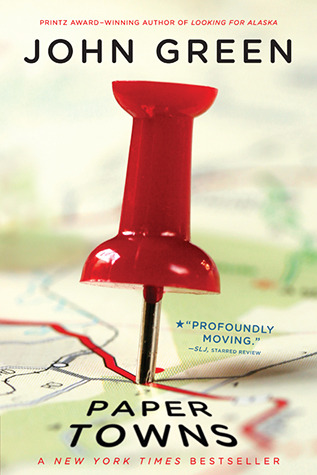
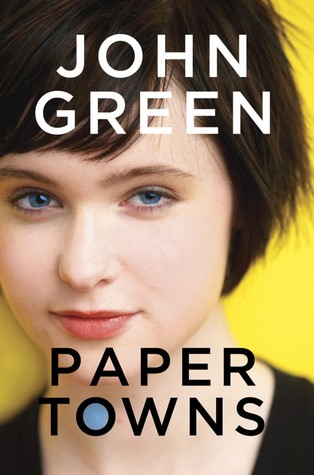
Paper Towns
Paper TownsThe way I figure it, everyone gets a miracle. Like, I will probably never be struck by lightning, or win a Nobel Prize, or become the dictator of a small nation in the Pacific Islands, or contract terminal ear cancer, or spontaneously combust. But if you consider all the unlikely things together, at least one of them will probably happen to each of us. I could have seen it rain frogs. I could have stepped foot on Mars. I could have been eaten by a whale. I could have married the queen of England or survived months at sea. But my miracle was different. My miracle was this: out of all the houses in all the subdivisions in all of Florida, I ended up living next door to Margo Roth Spiegelman. 

Here is what I said in my original review of Paper Towns in April: "Because I enjoyed The Fault in Our Stars, I was really looking forward to this book, also by John Green. It was just as good, if not a little better, than The Fault in Our Stars. Quentin Jacobson has spent his middle and high school years loving the adventurous, magnificent, Margo Roth Spiegelman from a distance. But then one night she climbs into his room and summons him to help her conduct a campaign of revenge, which takes the whole night. The next day, Q arrives at school and discovers that Margo has disappeared. But he discovers special clues-for him. They lead him to Margo, but he discovers that he hardly knows who she really is. 

'What can I say? This book had a great plot, quite interesting. Also, Q's narration was very funny at times; he definitely sounded like a teenager. And of course, Margo, a very appealing character: spunky, clever, funny, and adventurous. And the book had a nice feel in hand. Some of the ideas expressed in the book were very intriguing, too, and now I think I might tackle Leaves of Grass, which played an important part in Q's finding Margo. Paper Towns has some really hilarious moments, and the concept of the paper town was new to me. I won't give it away, but it was very cool."

As I mentioned in my review of The Fault in Our Stars, I've recently begun watching the Vlogbrothers (I'm up to late 2010 now!). At any rate, I remember really enjoying Paper Towns, and I thought that I would enjoy it even more having heard what John has to say about the book and its hidden meanings. The hardcover edition (on left) has two different covers, two different wrong perceptions of Margo that people have. Because when they look at Margo, instead of seeing her, they see themselves embodied in her. They're both wrong. Also, the black Santa collection in Paper Towns is very symbolic. Anyway, you should go check out the Vlogbrothers, and the many videos about Paper Towns. DFTBA. 

My favorite John Green book is at this point certainly The Fault in Our Stars, followed by Paper Towns. Then Will Grayson, Will Graysonthen Looking For Alaska, then An Abundance of Katherines. I haven't read Let it Snow, though I kind of want to. 

Paper Towns has is its hilarious moments and also its deeply thoughtful moments. There are many great quotes, and it really is an amazing book. The first 20 pages or so are a bit slow, but it quickly picks up. The road trip towards the end of the book is one of the most hilarious things ever. I loved this one, more than the first time I read it. The premise may be a tad bit unrealistic, but it's still an excellent book. 

Read Paper Towns:
  • if you like John Green
  • if you like books set in Florida
  • if you like books with road trips
305 pages. 
 
Outstanding Book That Will Stay On My Bookshelf For Rereading (jf I own it)!

Tuesday, May 14, 2013

The Unchangeable Spots of Leopards, Kristopher Jansma

The Unchangeable Spots of LeopardsI've lost every book I've ever written. I lost the first one here in Terminal B, where I became a writer, twenty-eight years ago, in the after-school hours and on vacations while I waited for my mother to return from doling out honey -roasted peanuts at eighteen thousand feet. 

"From as early as he can remember, the hopelessly unreliable—yet hopelessly earnest—narrator of this ambitious debut novel has wanted to become a writer. From the jazz clubs of Manhattan to the villages of Sri Lanka, Kristopher Jansma’s irresistible narrator will be inspired and haunted by the success of his greatest friend and rival in writing, the eccentric and brilliantly talented Julian McGann, and endlessly enamored with Julian’s enchanting friend, Evelyn, the green-eyed girl who got away. After the trio has a disastrous falling out, desperate to tell the truth in his writing and to figure out who he really is, Jansma’s narrator finds himself caught in a never-ending web of lies."

I was really, really, really looking forward to reading this book, and I was not disappointed. The writing immediately grabbed me, and I couldn't wait to see what would happen next. I won't say that I read it in one sitting because I got distracted by the Vlogbrothers, but it was still a really fascinating novel, the kind of novel that doesn't really have a specific "genre". The Unchangeable Spots of Leopards discusses different types of truths and lies and fictions, as well as being really entertaining. I notice that I'm using a lot of "really's" in this review. 

The three main characters in The Unchangeable Spots of Leopards were also really fascinating to me. Evelyn is fascinating not only to our unnamed narrator, but also to me, and I'm sure other readers. She was such an interesting mix of different parts. Both Julian and the narrator were really interesting too. More really's. 

There are also brilliant stories within stories, and more stories within those stories. This was a bit confusing, but also a great technique. It creates more layers, and characters that are based off of characters who are based off of characters who are based off of real people (presumably). And that's where the truth and lies and fiction come in. 

I also loved that the reader gets to travel with the narrator all over the globe: New York, Sri Lanka, Dubai, India, and more. There are so many locations that keep the book varied. You never know where the narrator is going to be next; he only stays in many of the locations for one chapter, and then he moves again. He encounters multiple reincarnations of Julian and Evelyn along the way before he finally meets up with them again. He also encounters someone who seems to be a doppelganger in Ghana. 

As I've said many times before, I love books that have multiple narratives woven throughout them, and The Unchangeable Spots of Leopards definitely had that, not in the sense that the reader follows multiple characters at once, but in the sense that there are multiple versions of each story, stories within stories, and more.  

Sometimes it seemed a bit unrealistic to me that the narrator could conceal his name so well. There were so many moments when someone would be about to say his name, and then the author would distract us, or something else would happen, and you wouldn't get to find out. But then he gets involved with this girl, Julia, and he doesn't even tell her his name. What I did like was that throughout the book, he goes through different aliases; his first at a debutante ball under the name of a Wilkie Collins character.

I think that image: someone not of that circle, at a debutante ball, using the name of a Wilkie Collins character, kind of shows what the whole novel is like. It's humorous, mysterious, evocative, powerful, and interesting, literary fiction at its best. I'm so, so glad that I wasn't disappointed about this one, as I sometimes am when I get irrationally excited about a book. This is definitely a novel that I would whole-heartedly recommend. It's well worth reading. Thanks to Viking for sending me a review copy. 

251 pages. 
 
Outstanding Book That Will Stay On My Bookshelf For Rereading (jf I own it)!

Monday, May 13, 2013

The Tenant of Wildfell Hall, Anne Bronte

The Tenant of Wildfell Hall
The Tenant at Wildfell HallDear Halford, When were together last, you gave me a very particular and interesting account of the most remarkable occurrences of your early life, previous to our acquaintance and then you requested a return of confidence from me.

Like The Professor, The Tenant of Wildfell Hall begins with a letter, though the subject of the story is very different. "When the mysterious and beautiful young widow Helen Graham becomes the new tenant at Wildfell Hall, rumours immediately begin to swirl around her. As her neighbour Gilbert Markham comes to discover, Helen has painful secrets buried in her past that even his love for her cannot easily overcome. Her marriage to a dissolute, unfaithful, and cruel husband is chronicled in her diary and leads to the drastic measures she took to escape from him." According to the back of the copy I read, Anne's more famous sister Charlotte feared that it was "an entire mistake" to write this book, which deals with some controversial issues at the time and defends a woman's right to flee a disastrous marriage. 

I didn't love Agnes Grey, but I loved The Tenant of Wildfell Hall after about 100 pages. It was definitely an interesting book. It was much more meaningful than The Professor; the issues that it talked about were probably really pressing at the time that it was written, and still are to some extent. It was also really entertaining, and Gilbert Markham's conflicted feelings were shown so well. I found Agnes Grey to be rather dull, but The Tenant of Wildfell was not. Nothing too thrilling happens, yet the reader is absorbed by this novel. 

In some ways, I may even have liked The Tenant of Wildfell Hall more than Jane Eyre. It was somehow more moving and immediate to the modern reader. Some parts were a bit cringe-worthy (Helen Graham's over-the-top piety, for example), but at the time, The Tenant of Wildfell Hall was a very bold book. I feel like it gripped me more than Jane Eyre. Jane was a compelling character, but Helen is more so. The reader admires her for determination to be free. There was a great review on Goodreads by Elizabeth. Here's part of her review that I think really captures one of the great elements of this novel: "The book has a dual narrative and this theme is in both parts, both in Helen's journal and Gilbert Markham's letters. In the former, Bronte presents the extreme case of wantonness, vice, dissipation, and domestic cruelty. In the latter, the subtle examples come out: country gossip, small minds, spiteful old ladies, catty rivals for men's affections. It's delicious. " That's exactly it. We get to see all these not-so-appealing things, but the portrait of it is painted so, so well. I found everything about this novel really well-done: the writing, the characterization and the plot. It's so finely crafted.

One thing that I noticed was really interesting is that in many fairy tales, and also in Austen's novels, the heroine seeks to change a man, to teach him to be better, and to reform him. Which is probably really unrealistic; I don't think a person can be changed quite that easily. At any rate, Helen tries to do that, and it results in disaster. The Bronte sisters generally paint a more realistic - if more bleak - portrait of humanity. Sometimes they can be a bit over the top, but I absolutely loved The Tenant of Wildfell Hall; it was an amazing book, definitely a must-read. It was much more thought-provoking and entertaining than The Professor. I kind of picked this up on a whim, and I'm really, really glad that I did. The Tenant of Wildfell Hall is an excellent Bronte novel, definitely a favorite. 

Read The Tenant of Wildfell Hall:
  • if you like Anne Bronte 
  • if you like the Bronte sisters
  • if you like British literature
429 pages. 
 
Outstanding Book That Will Stay On My Bookshelf For Rereading (jf I own it)!

Sunday, May 12, 2013

The To-Read Pile

These are some books that I have right now and will get to eventually:

Above All ThingsA Child AgainWives and DaughtersComplete Short Stories (Greene, Graham)The River of No ReturnJepp, Who Defied the StarsAngelmakerEon (Eon, #1)FreedomThe Legend of Broken

Above All Things by Tanis Rideout: A mix of The Paris Wife and Into Thin Air (which I have not read). It looks good and interesting, though I'm not super excited about it.

A Child Again by Robert Coover: My dad got this for me while he was in New York, and it looks like a really great collection of fairy tales. There's also a deck of cards involved.

Wives and Daughters by Elizabeth Gaskell: I loved Cranford, so I'm looking forward to this one.

Complete Short Stories: I love Graham Greene, but recently my interest in it has waned, so we'll see.

The River of No Return by Bee Ridgeway: I saw this advertised on Goodreads, and managed to get my hands on a review copy of it. Looking forward to reading this book from Dutton.

Jepp, Who Defied The Stars by Katherine Marsh: I've been wanting to read this book for a while, since it was made one of the best YA books of 2012 by the New York Times.

Angelmaker by Nick Harkaway: Erin Morgenstern loved it, so that's enough for me. Although I didn't love The Vanishing Act, which she did.

Eon by Alison Goodman: A friend lent this to me, and I still have not read it. Hopefully soon.

Freedom by Jonathan Franzen: Picked up on a whim.

The Legend of Broken by Caleb Carr: Another gift, which looks interesting.

Some books that I don't have yet but are out and that I really want to read:
The Hero's Guide to Storming the CastleRequiem (Delirium, #3)Ghana Must GoLet it SnowJane Austen: A LifeFire Study (Study, #3)Howards EndMy Ántonia

Saturday, May 11, 2013

One Hundred Years of Solitude, Gabriel Garcia Marquez (translated by Gregory Rabassa)

Many years later, as he faced the firing squad, Colonel Aureliano Buendia was to remember that distant afternoon when his father took him to discover ice. 

"It is typical of Gabriel García Márquez that it will be many pages before his narrative circles back to the ice, and many chapters before the hero of One Hundred Years of Solitude, Buendía, stands before the firing squad. In between, he recounts such wonders as an entire town struck with insomnia, a woman who ascends to heaven while hanging laundry, and a suicide that defies the laws of physics. The story follows 100 years in the life of Macondo, a village founded by José Arcadio Buendía and occupied by descendants all sporting variations on their progenitor's name: his sons, José Arcadio and Aureliano, and grandsons, Aureliano José, Aureliano Segundo, and José Arcadio Segundo. Then there are the women--the two Úrsulas, a handful of Remedios, Fernanda, and Pilar--who struggle to remain grounded even as their menfolk build castles in the air. If it is possible for a novel to be highly comic and deeply tragic at the same time, then One Hundred Years of Solitude does the trick. Civil war rages throughout, hearts break, dreams shatter, and lives are lost, yet the effect is literary pentimento, with sorrow's outlines bleeding through the vibrant colors of García Márquez's magical realism. Consider, for example, the ghost of Prudencio Aguilar, whom José Arcadio Buendía has killed in a fight. So lonely is the man's shade that it haunts Buendía's house, searching anxiously for water with which to clean its wound. Buendía's wife, Úrsula, is so moved that 'the next time she saw the dead man uncovering the pots on the stove she understood what he was looking for, and from then on she placed water jugs all about the house.'"

From reading all of the reviews on Goodreads, I have come to the conclusion that there are many who love Marquez and even more who hate this particular brand of magic realism. But magic realism and I have always gotten along pretty well. I didn't hate it at all; in fact, I really enjoyed One Hundred Years of Solitude. Yes, there were way too many confusing characters, but if I just stopped trying to remember who they were in relation to everyone else, I could really enjoy the book. It's quite magical, actually.

I'll admit that I partly started reading this book just so I could say that I had read it, never a good reason to start anything. But I didn't finish it because I wanted to have said that I'd read it. I finished it because I really enjoyed it and the strangeness of it. Make no mistake about it; it is a strange book, full of strange things. And these magical events are really brilliant, entertaining, (yes, strange), and enjoyable to read. There's some chocolate in One Hundred Years of Solitude; it has magical powers, and I think that's about right. Chocolate makes everything better. 

At first the technique of just trying to stop remembering helped, but the similar names did get really confusing.  There are so many people named Jose Arcadio, or some variant of those names. There are four of those. There are about twenty-three people named Aureliano, although seventeen of them are minor characters. There are also a whole lot of other repeating names. I think that's the reason a lot of people just get put off by the book, and I can definitely see why. I'm not sure why that choice was made. Perhaps to emphasize the solitude; they all have the same names. At any rate, the names made me not love the book, but I did really enjoy it, more than I was expecting. It's definitely a thought-provoking read. (Sorry for the short review).

Reread One Hundred Years of Solitude:
  • if you like Gabriel Garcia Marquez
  • if you like Latin American literature
  • if you like magic realism
422 pages. 
 
Very Good! I would recommend this book!

Friday, May 10, 2013

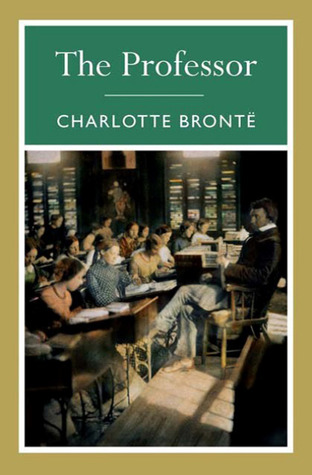
The Professor, Charlotte Bronte


The ProfessorThe ProfessorThe other day, in looking over my papers, I found in my desk the following copy of a letter, sent by me a year since to an old school acquaintance: - 'Dear Charles, - I think when you and I were at Eton together, we were neither of us what could be called popular characters: you were a sarcastic, observant, shrewd, cold-blooded creature ; my own portrait I will not attempt to draw, but I cannot recollect that it was a strikingly attractive one - can you?

The Professor was Charlotte Bronte's first novel. The Professor " is a story about the life of the resilient William Crimsworth. An English orphan raised by coldly aristocratic uncles, he rejects a life as a clergyman to work in his brother's mill in Yorkshire. Treated abominably in his tedious clerkship, Crimsworth escapes to Belgium and begins teaching in a boys' school. There he eventually meets the headmistress of a neighboring girls' school, Zoraide Reuter, as well as one of the teachers in the girls' school, Francis Henri. Narrated from a convincing male perspective, Bronte exercised her skill as a writer in telling a tale based on her own experiences as a student in Brussels, challenging many of the assumptions of Victorian society in the process. Crimsworth matures, finds a fulfilling profession, and discovers love in this significant commencement to Charlotte Bronte's literary career."

I still love Jane Eyre, but I did enjoy The Professor and its writing and story. I did really like the language in it; continuously reading it becomes rather tedious, but in a fairly short novel like this, it was fun to read. Also, I couldn't help wondering how one would diagram sentences like the ones in The Professor and other older novels. At any rate, I really enjoyed the writing.

There is a lot of French in The Professor and one thing that was really annoying in the edition that I read (on right) was that there weren't any footnotes telling the reader what the French meant! The company just assumed that you either know French, don't care, or are motivated enough to look it up. I do care, but not enough to look up the French most of the time. I did use our friend Google Translate in a few instances. Most of the time I could surmise what was being said, but it was confusing sometimes. There's not lots of French, but it's definitely a significant part of the story. So I would not recommend reading the Arcturus Classics edition. It was the only one available at my local bookstore, though. Still, Penguin is a good way to go, even if they do sometimes include too many footnotes.

Back to the actual content of the book, which I really enjoyed. Though not understanding the French definitely detracted from my enjoyment and understanding of the book, I still really did like it. As I mentioned, it had the potential to get tedious, but it didn't in my opinion. I enjoyed the characters, and they way they had subtle conversations with one another. I liked how Frances Henri was introduced.

If you like Jane Eyre or the Bronte sisters in general, this is definitely a good novel to read, especially since these sisters produced so few works. I also have The Tenant of Wildfell Hall.

Read The Professor:
  • if you like Charlotte Bronte
  • if you like English literature
208 pages.
 
Very Good! I would recommend this book!

Thursday, May 9, 2013

Tender Is the Night, F. Scott Fitzgerald

Tender Is the NightOn the pleasant shore of the French Riviera, about half way between Marseilles and the Italian border, stands a large, proud, rose-colored hotel. Deferential palms cool its flushed facade, and before it stretches a short dazzling beach. 

"Set on the French Riviera in the late 1920s, Tender Is the Night is the tragic romance of the young actress Rosemary Hoyt and the stylish American couple Dick and Nicole Diver. A brilliant young psychiatrist at the time of his marriage, Dick is both husband and doctor to Nicole, whose wealth goads him into a lifestyle not his own, and whose growing strength highlights Dick's harrowing demise. A profound study of the romantic concept of character -- lyrical, expansive, and hauntingly evocative -- Tender Is the Night, Mabel Dodge Luhan remarked, raised F. Scott Fitzgerald to the heights of 'a modern Orpheus.'"  The Great Gatsby is great (no play on words intended), and it's definitely a favorite, but I wanted to read some of Fitzgerald's other novels (there are several). Tender Is the Night sounded the most interesting, and finally I acquired a copy of it without having to resort to Amazon!

The Great Gatsby and Tender Is the Night are very different but both brilliant. This novel is set in France at a resort, whereas Fitzgerald's more famous novel is set in Long Island. The writing is also different in both books, though I really loved the writing in both of them. One of the main differences is that Tender Is the Night is told in third person whereas The Great Gatsby is narrated by Nick. The thing about The Great Gatsby is that it's 180 pages, more of a novella than a novel. Tender Is the Night, however, is a full-length book. I'm not saying there's anything wrong with shortness, but a longer work allows the writer to develop the characters, the events, and the subtle relationships much more. This makes Tender Is the Night in some ways a better crafted novel. But I do love The Great Gatsby more; in some ways the its shortness makes it more action packed. Though I think this one deserves more acclaim than it has got. Hemingway loved it.

Tender Is the Night proceeds at a much slower pace than The Great Gatsby, which was great to read. It is just as lyrical and profound as Fitzgerald's more famous book, but softer and more musing somehow. Even though it's not told in the first person, we get to see Rosemary's perspective really well, as more as a general outlook on events.

I unfortunately left Tender Is the Night at school over the weekend, so my reading of it was disrupted a bit. It's definitely really different in tone to anything else of Fitzgerald's that I've read. Some parts of it did drag a little bit and I got bored, but overall, I really enjoyed Tender Is the Night.

Read Tender Is the Night:
  • if you like F. Scott Fitzgerald
  • if you like books set in France
315 pages.
 
Very Good! I would recommend this book!