Tuesday, October 29, 2013

Neverwhere, Neil Gaiman

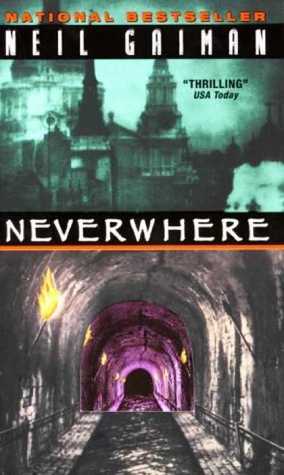
NeverwhereThe night before he went to London, Richard Mayhew was not enjoying himself. 

"Under the streets of London there's a place most people could never even dream of. A city of monsters and saints, murderers and angels, knights in armour and pale girls in black velvet. This is the city of the people who have fallen between the cracks. Richard Mayhew, a young businessman, is going to find out more than enough about this other London. A single act of kindness catapults him out of his workday existence and into a world that is at once eerily familiar and utterly bizarre. And a strange destiny awaits him down here, beneath his native city: Neverwhere."

I've been working my way through Neil Gaiman's adult fiction, and it is really good, Neverwhere being no exception. It's a deliciously eerie and darkly humorous story, and I really enjoyed it. The book is early Gaiman and I suppose you can tell that he's experimenting, but I still loved the creative plotline and the writing, which is inventive, enthralling, and amazingly descriptive. I almost wanted to touch the words. American Gods might be a bit more ambitious of a novel, but in some ways Neverwhere is better; it's certainly much more atmospheric.


Neverwhere is by turns humorous and disturbing. One humorous part was at the very beginning when Richard is trying to confirm a reservation he totally forgot about. The person on the other end's tone implies that "a table for tonight should certainly have been booked years before - perhaps, it was implied, by Richard's parents. A table for tonight was impossible: if the pope, the prime minister, and the president of France arrived without a confirmed reservation, even they would be turned out into the street with a continental jeer" (pg. 15). There are also certain sequences that are quite nightmarish, such as when no one remembers Richard, not even his fiancee. I have a theory about this; the less people knew him, the more invisible he is to them. Complete strangers can't see Richard at all, a colleague at work can barely keep her attention on him, a good friend has no idea who he is, and his fiancee just manages to recollect his first name, if not his last. The beginning of his plunge is of course him helping Door, the wounded girl, but when he's turned out of his apartment, he must enter the other side of London in earnest.

Neil Gaiman is amazingly creative; I don't know where he comes up with the multi-faceted worlds in his novels. American Gods, Neverwhere, and Stardust all take place in unique realms just below the surface of mundane, regular life.

There are some really inventive characters in this novel. I enjoyed the character of Door, and also Mr. Croup and Mr. Vandemar who are really, really scary. They basically live to torture people, and the scenes with them were so chilling. Perhaps these two characters aren't so inventive; they're pretty much typical supernatural villains who enjoy torture and eating things that no human being eats. There are a lot of other characters though, who are so weird and different, like the marquis, Hunter, and many, many others in the strange realm that Richard enters. Door is an interesting character. It's impossible for Richard and everyone else to tell what color her eyes are, "not blue, or green, or brown, or gray; they [remind] him of fire opals: there [are] burning greens and blues, and even reds and yellows that vanished and glinted as she move[s]." (pg. 39). That was just one of the many beautiful descriptions in Neverwhere.

Perhaps some sections of the book were a bit bogged down, but overall the book proceeded at a fairly good pace, and I was seldom bored. There were many twists and turns, and sickening events, and all in all this was a thoroughly good Gaiman novel.

370 pages.

Rating: *****

Monday, October 28, 2013

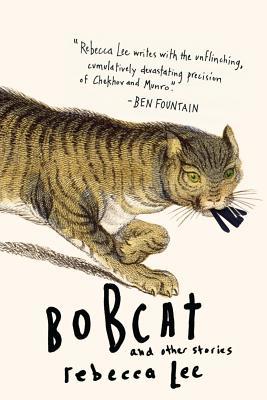
Bobcat and Other Stories, Rebecca Lee

Bobcat and Other StoriesFrom "Bobcat": It was the terrine that got to me. I felt queasy enough that I had to sit in the living room and narrate to my husband what was the brutal list of tasks that would result in a terrine: devein, declaw, decimate the sea and other animals, eventually emulsifying them into a paste which could then be riven with whole vegetables. It was like describing to somebody how to paint a Monet, how to turn the beauty of the earth into a blurry, intoxicating swirl, like something seen through the eyes of the dying.

"At turns witty, heartbreaking, and fiercely intelligent, Bobcat and Other Stories establishes Rebecca Lee as one of our most gifted and original short story writers. Using a range of landscapes and countries, Lee creates full worlds, so that each story reads like a short novel. A student plagiarizes a paper and holds fast to her alibi, finding herself complicit in the resurrection of one professor s shadowy past. A dinner party becomes the occasion for the dissolution of more than one marriage. A woman is hired to find a marriage match for the one true soulmate she s ever found. In all, Rebecca Lee traverses the terrain of infidelity, obligation, sacrifice, jealousy, and finally, optimism. She creates characters so wonderfully flawed, so driven by their desire, so compelled to make sense of their human condition, that it's impossible not to feel for them when their fragile beliefs of romantic love, domestic bliss, or academic seclusion fail to provide them with the sort of force field they d hoped for."

Bobcat was an interesting collection of short stories, with some beautiful language and interesting images. It was certainly different than what I was expecting, but I really enjoyed it. As I was reading, I marked so many passages that were of interest to me that I started having to improvise bookmarks (admittedly, I wasn't at home). But still, there were so many great and surprising descriptions, especially in the second story in the collection, "The Banks of the Vistula" Here are some of them from that story, which is the one about a student plagiarizing her paper. When the main character walks into the woods, she writes, "I heard about a thousand birds cry, and I craned my neck to see them lighting out from the tips of the elms. They looked like ideas would if suddenly released from the page and given bodies - shocked at how blood actually felt as it ran through the veins, as it sent them wheeling into the west, wings raking, straining against the requirements of such a physical world." I liked the pun there too (craned). I also liked a description of a certain type of  light as "like the light in fairy tales, rich and creepy." Rebecca Lee has a thing with light; later in the story a professor gives a lecture as "long autumn rays of sun, embroidered by leaves, covered his face and body." In the next story, "Slatland", one of the characters has a name similar to "well-lit" in Romanian, rila. There are lots of other references to light woven throughout many of the stories.

Talking about parties, Rebecca Lee describes a certain type as "deeply cozy, their wildness and noise an affirmation against the formless white midwestern winter surrounding us."

Really, the magic of these stories is how grounded they are, and how sharply aware the author seems to be of every single line, every single word choice. She writes assuredly, creating piercing portrayals of deeply flawed and human characters and landscapes and settings. I was gripped by each story, a world within a world, and each was interesting in its own way, with different things to ponder, and a different mood and tone to it. 

These stories are so rich, and if not as rich as novels as the jacket claims, almost. I got lost in the world of the characters, in their problems and their weird ways of coping with them (like in "Slatland"). Each story was unique but in a kind of undefinable way seemed to tie back to the preceding stories, as if the characters were all related in some way or other. 

"Min", the story about a woman hired to find a wife for her "one true soulmate", wasn't my favorite story, but as soon as the situation became clear, it got much better. The absurdity and the sadness of the set-up was very affecting. There were also details that were funnily irrelevant; for example, every day the narrator has one cucumber sandwich, a bag of squid chips, and a pomelo for lunch. There are more references to light in this story too; she describes a woman named Rapti who she meets as "living in an apricot light". There are gleams and rays and shines, and lots of words that are related to light smattered throughout these stories in a clever way, and I thought that was rather interesting, and a good way of loosely tying them all together. 

The design of the book was beautiful too, with paperback flaps, a nice cover image, and a good texture. Somehow the paper quality makes a difference, you know? It's another element of a book which I can enjoy, and the way the book was structured seemed to really fit it somehow.

I really enjoyed this collection of stories; as in any book of short stories, some were better than others, but they were all pretty good once I got into them. 

209 pages. 

Rating: ****

Sunday, October 27, 2013

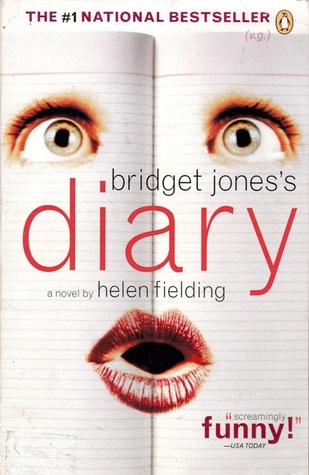
Bridget Jones's Diary, Helen Fielding

Bridget Jones's Diary (Bridget Jones, #1)Ugh. The last thing on earth I feel physically, emotionally, or mentally equipped to do is drive to Una and Geoffrey Alconbury's New Year's Day Turkey Curry Buffet in Grafton Underwood.

Weirdly formatted summary from Goodreads: "Meet Bridget Jones—a 30-something Singleton who is certain she would have all the answers if she could:
a. lose 7 pounds
b. stop smoking
c. develop Inner Poise
Bridget Jones's Diary is the devastatingly self-aware, laugh-out-loud daily chronicle of Bridget's permanent, doomed quest for self-improvement — a year in which she resolves to: reduce the circumference of each thigh by 1.5 inches, visit the gym three times a week not just to buy a sandwich, form a functional relationship with a responsible adult, and learn to program the VCR. Over the course of the year, Bridget loses a total of 72 pounds but gains a total of 74. She remains, however, optimistic."

Bridget Jones's Diary is an amusing and very silly read, kind of a guilty pleasure for me. I haven't actually seen the full movie (just clips from it), but I picked up the book from the library (I don't think it's necessarily worth buying). Still, the book is kind of relatable, even if I'm not as stupidly obsessed with other people's opinions as Bridget (or I try not to be). The way she acts is kind of silly, but I can sort of understand her insecurities: after all, she's watching everyone around her rapidly marrying off, and at the age of 30-something, she's still utterly single. Not that that's a bad thing, as she continuously tries to remind herself throughout the novel. Bridget's friends are really funny; they're always advising her on what to do; sometimes it works and sometimes it doesn't. But the book is never boring.

Bridget Jones's Diary is definitely chick lit, a genre that I for the most part despise, but in this case, it's not so bad, and rather more endearing. The book is humorously British, and Bridget also has a distinctive voice. It's a diary, so she often uses fragments, which is kind of annoying but very readable. I actually started thinking in fragments right after I read the book, and I quickly got used to the narrative style.

Yes, I realize the story is super silly and not very worthwhile, but that's exactly what guilty pleasures are: books that you're kind of ashamed of enjoying or you think are not worth reading. That's exactly what this book is for me. I don't know if I'll be rereading it, but I definitely enjoyed reading it once, and was glad that I did so. It's good for a few hours of laughter and commiseration.

That said, I don't think I'll be reading the sequel, because the book stands on its own just fine, and I think one book with Bridget is quite enough. Also, I'm pretty sure the sequel is not as good as the first book, and that the third book which is being released soon will be even worse.

There were sections of Bridget Jones's Diary that did get bogged down a bit, but just as it got to be too much, something really funny popped up, like when Bridget talks about communal changing rooms: "There are always girls who know that they look fantastic in everything and dance around beaming, swinging their hair and doing model poses in the mirror saying, 'Does this make me look fat?' to their obligatory obese friend, who looks like a water buffalo in everything" (105). I don't know where Bridget got that from, but it was so hilarious.

Bridget may be a character you can relate to, but she is kind of annoying at times. She gets so flustered about stupid, stupid things and never keeps her resolutions about smoking and drinking (she gets drunk all the time). Bridget certainly isn't the most likable character ever, but she's okay, especially compared to the awful Daniel Cleaver. God, I just hated him.

Anyway, this is a funny book and a light and fun read. It's quick, and good for a lot of laughs.

271 pages.

Rating: ****

Saturday, October 26, 2013

The Almond Tree, Michelle Cohen Corasanti

The Almond TreeMama always said Amal was mischievous. It was a joke we shared as a family - that my sister, just a few years old and shaky on her pudgy legs, had more energy for life than me and my younger brother Abbas combined. So when I went to check on her and she wasn't in her crib, I felt a fear in my heart that gripped me and would not let go. 

"Gifted with a mind that continues to impress the elders in his village, Ichmad Hamid struggles with the knowledge that he can do nothing to save his friends and family. Living on occupied land, his entire village operates in constant fear of losing their homes, jobs, and belongings. But more importantly, they fear losing each other. On Ichmad's twelfth birthday, that fear becomes reality. With his father imprisoned, his family's home and possessions confiscated, and his siblings quickly succumbing to hatred in the face of conflict, Ichmad begins an inspiring journey using his intellect to save his poor and dying family. In doing so he reclaims a love for others that was lost through a childhood rife with violence, and discovers a new hope for the future."

I didn't really enjoy The Almond Tree, which I received via a Goodreads First Reads giveaway. I didn't end up finishing the whole thing. On the one hand, it was fairly well written on a smaller scale; on the other, it seemed a bit too simplistic to me at times, and was overall unfocused. Obviously, no novel is going to change anything about the Israeli-Palestinian conflict, and no novel can fully illustrate the myriad of complexities, but I did appreciate Corsasanti's effort, although she seemed rather biased. Although her Goodreads profile is cut off in its description, I think what she was trying to get at is that she was raised in an Orthodox home and then married a Palestinian? That's certainly what her name suggests, but I'm not exactly sure.

The Almond Tree was certainly absorbing at first, and an okay story. A lot of awful, awful things happen to Ichmad's family, among others, and he, at the age of twelve, is left to cope with it and try and bring his family back together. It's unimaginable to me, and to most people in the so-called developed world. It almost hearkens back to when boys and girls started working at such young ages (some even at eight). Ichmad is already respected by the community for his intelligence and his skill at backgammon. Perhaps his intelligence was made a bit too much of; somehow, nothing else about his character is emphasized except for his fascination with science and other things. He was a bit one-sided as a character, and so were most of the other people in the story, for that matter. The Almond Tree was mainly good for its engaging plot, and its taking on the complicated issues that have been raging ever since right after World War II.

Still, there were many incidents in the novel that I found interesting, and it was heartbreaking to have to read about Ichmad and his younger brother having to go to work at such young ages. Ichmad still does tutoring sessions in the evening with his teacher, but both of them are working so hard, and not really earning enough to eat enough food. It's an awful situation, with seemingly no solution in sight. Ichmad catches a rabbit, but right after that the area is declared a no trespass zone. And it's not enough, really. Salvation comes in the form of a college scholarship.

The Almond Tree seems almost self-published in its formatting: with the same cover texture, paper, and font as many self-published books (it also has no listed price on the back). But it's not, I don't think, it was published by Garnet, a British publisher. I don't have anything against self-published books per se; I just don't really want to read people's unedited stuff that a reputable publisher hasn't taken on. So I was a little uneasy about that initially, but I don't think The Almond Tree fits into that category. It certainly read like a self-published book, though. There were so many things that happened so abruptly without organization, and the book could have been a lot tighter and more planned. It kind of felt like the author was just randomly writing, and that ultimately made me put it down. The Almond Tree is an okay book, I suppose, but I just wasn't interested in the characters, even though the part that I read had its points. So it's worth a try, but it wasn't for me.

348 pages.

Thursday, October 24, 2013

Before I Fall, Lauren Oliver

Before I FallThey say that just before you die your whole life flashes before your eyes, but that's not how it happened for me.

"What if you only had one day to live? What would you do? Who would you kiss? And how far would you go to save your own life? Samantha Kingston has it all: looks, popularity, the perfect boyfriend. Friday, February 12, should be just another day in her charmed life. Instead, it turns out to be her last. The catch: Samantha still wakes up the next morning. Living the last day of her life seven times during one miraculous week, she will untangle the mystery surrounding her death—and discover the true value of everything she is in danger of losing."

I have seriously mixed feelings about Before I Fall. On the one hand, the premise is very interesting (though not exactly original) and Lauren Oliver is a pretty good writer; on the other, I absolutely hated the characters. Loathed them. I realize that characters don't always have to be super likable, but I do like having a main character and supporting characters who I can at least understand and sympathize with a bit. Samantha and her group of friends are basically just evil witches (replace "w" with "b" for a more accurate description). They make fun of the unpopular kids, like to jerk people around, and seem to forget that just two years ago, they were sophomores. Also, Samantha used to be at the bottom of the social ladder; now she's at the top, but she doesn't seem to remember where she was before and enjoys making fun of people less fortunate than her. Still, she is an interesting character, and I suppose it was kind of refreshing to read into the mind of a really nasty person. 

I did consider putting the book down because I hated the characters so much, but ultimately I read all of it, because it was really gripping, and it did suck me in (although the first few days were kind of uninteresting). Before I Fall is all about your choices and how they can have consequences, both big and small. I wanted some explanation for the weird things happening to Samantha, and I wanted to see whether she could cheat the thing by not going to the party or whatever (although obviously, I did know that that wasn't going to work).

Some of Samantha's friends were even worse than she was. They're so nasty to people, like Juliet Sykes, and when something happens that could have been because of them, they don't care. Lindsay in particular was awful; with Samantha you sometimes get these flashes of humanity, but Lindsay just seemed to be totally nasty and indifferent to everyone else's feelings. 

I feel like there are so many unrealistic portrayals out there of what high school is like. My high school, at least, is mostly unlike the school Samantha goes too, with people smoking weed in the bathrooms and a very strict social order. I mean, it's far from a great place, but people are actually pretty nice generally at my school (if dimwitted), and I find it kind of unrealistic that a school like this would actually exist. I mean, maybe they do, but probably most of the high schools in America aren't like this. I really don't know, but far too many YA books have nasty, nasty high school atmospheres, something I've never experienced. The sex and the drinking and the drugs also made me really uneasy; it seemed a bit over the top, at least to me. I can deal with that sort of stuff, but a lot of it seemed kind of unnecessary, as if Lauren Oliver was trying too hard to prove a point. This was her first novel, so I suppose she was still experimenting. 

I liked Before I Fall okay, but I can't say that I really enjoyed it, due to the awful, awful characters and the portrayal of high school. Still, the plot idea was cool, and the book did draw me in, despite my dislike of many aspects. You've got to give Lauren Oliver credit for that. 

470 pages. 

Rating: ***

Wednesday, October 23, 2013

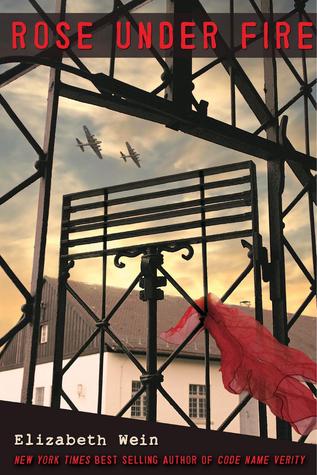
Rose Under Fire, Elizabeth Wein

Rose Under FireI just got back from Celia Forester's funeral. I'm supposed to be writing up an official report for the Tempest she flew into the ground, since she's obviously not going to write it herself and I saw it happen.

"While flying an Allied fighter plane from Paris to England, American ATA pilot and amateur poet, Rose Justice, is captured by the Nazis and sent to Ravensbrück, the notorious women's concentration camp. Trapped in horrific circumstances, Rose finds hope in the impossible through the loyalty, bravery and friendship of her fellow prisoners: a once glamorous French novelist whose Jewish husband and three young sons have been killed, a resilient young Polish girl who has been used as a human guinea pig by Nazi doctors, and a female fighter pilot and military ace for the Soviet air force. But will that be enough to endure the fate that’s in store for her?"

I've been waiting so long and have been so excited for Rose Under Fire, the companion to the brilliant Code Name Verity. Unfortunately, I wasn't able to get my hands on an ARC, but the book finally came out September 10th. Like Code Name Verity, Rose Under Fire takes a little while to actually get into, before it becomes the amazing, touching, heartbreaking book I knew it would be. As other reviewers have said, Rose Under Fire is less emotionally intense and less intense in general than Code Name Verity, but it's still a great book, and might be a better one depending on what your preferences are. Oddly enough, I didn't cry during Code Name Verity, or Rose Under Fire for that matter, but to me, Rose Under Fire felt much more close, more real, perhaps because before Rose is captured there are lots of descriptions of daily life and that makes her experiences in the concentration camp all the more awful in comparison. Still, I felt very emotionally wrought and rung out after reading both of these books. They're the kind of books where you need to read something light right afterwards to recover.

Rose Justice is an interesting and good new character. I'm glad that we got to meet an amazing new narrator, who I really fell in love with. That said, I didn't love most of the poems that were in the book, though a few of them were pretty good. It was a nice idea, but it didn't work very well for me; I'm not exactly sure why.

There were lots of excellent anecdotes in Rose Under Fire; maybe it was less sensational, but in some ways that made it a better read. I really enjoyed a lot of the descriptions, and it was a lot of the small things that Rose writes about that really got me, that hit me, and made me feel like crying or laughing or both. The very first one was Rose's description of the barrage balloons: "I can't get over how beautiful the barrage balloons are. I can't even talk about it to anyone - they all think I am crazy. But when you're in the air, and the sky above you is a sea of gray mist and the land below you is all green, the silver balloons float in between like a school of shining silver whales, bobbing a little in the wind. They are as big as buses, and I and every other pilot have a healthy fear of them because their tethering cables are loaded with explosives to try to snarl up enemy aircraft. But they are just magical from above, great big silver bubbles filling the sky. Incredible. It is just incredible that you can notice something like that when your face is so cold you can't feel it anymore, and you know perfectly well you are surrounded by death, and the only way to stay alive is to endure the howling wind and hold your course. And still the sky is beautiful." I loved those two paragraphs. I also loved the scene where Maddie and Rose confront the boys who are trying to take apart the bomb.

I mentioned the little things that hit me really hard. One of those was just a candlewick bedspread. Here's part of the passage: "It was the stupid candlewick bedspread's fault! Mrs. Hatch's bedspreads feel the same as the ones Mother has out on the sleeping porch. Anyway, I had the candlewick on my bed pulled up to my chin last night, and after I thought about the house party, I started thinking about the sleeping porch...I got so homesick I began to cry. I just couldn't stop thinking about the sleeping porch. It's funny what sets you off. You miss people the most - really it is Polly and Alice and Sandy and Fran whom I am lonely for - but it is the candlewick bedspread that makes me ache with longing to be home."

There was also another really poignant small moment, when Rose is first captured by the Germans: "Someone came in and gave me a cup of fake coffee and something a lot like a bologna sandwich, which I would have eaten if I had realized it was the last bologna sandwich I was ever going to see. But I just couldn't eat. I have dreams about that sandwich." That was so awful, as well as being a great piece of foreshadowing.

Wein also includes some good descriptions of the war itself. "They've [the Germans] lost. They must know they've lost - that they're on the run. It's all so pointless. It shouldn't take another year. But I bet it will. It's not desperation - there is something inhuman in it. That is what I find so creepy. Five years of destruction and mayhem, lives lost everywhere, shortages of food and fuel and clothing -- and the insane mind behind it just urges us all on and on to more destruction. And we all keep playing." It was very chilling.

I had tons of passages marked in the book, but I can't spout all the of the amazing quotes in Rose Under Fire; it would just take too long. It was somehow more emotional to me, not necessarily better, but more relatable. Both of these books are definitely among my favorites. Just like Code Name Verity, there are great female friendships in Rose Under Fire: between Maddie and Rose before Rose is captured, and between the woman suffering in the concentration camp. Really, just as many awful things happen in Rose Under Fire as in Code Name Verity: torture and worse. It's just, I suppose, a more quiet book. And the ending is happier, at least in some ways.

I loved that Rose was an American; it was a different take and one that makes sense. I enjoyed reading from her perspective a lot; she can kind of look at England and Germany with an impartial eye, but she cares just as deeply about the war and about flying. She narrates the story of her experiences in the camp from after she's rescued, so we know she doesn't die. But she's been deeply scarred, inwardly and outwardly.

Elizabeth Wein's writing style is so distinctive and easily recognizable, and yet I can't quite put my finger down on what it is that makes her writing her's and makes it so deeply moving. Any ideas? Like in Code Name Verity, the book is narrated through personal writings and some letters, although the set-up is different, and it's not as ingeniously plotted or thriller-like. Because, you know, Code Name Verity had that whole mystery which took your breath away, which is a whole level of complexity that Rose Under Fire didn't really have. Still, I just freaking loved it.                                                        

The book has some great similes and metaphors, such as in the passage about the barrage balloons. The writing is just beautiful, and it captured this amazing story. I would highly, highly recommend Rose Under Fire, whether or not you've read Code Name Verity (although it will spoil the ending of CNV).

346 pages.

Rating: *****

Tuesday, October 22, 2013

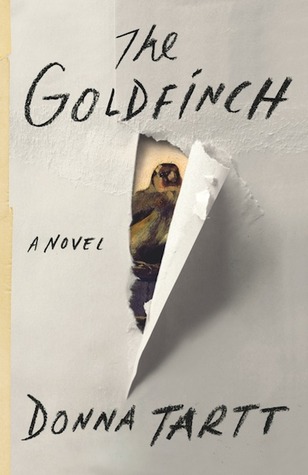
The Goldfinch, Donna Tartt

The GoldfinchWhen I was still in Amsterdam, I dreamed about my mother for the first time in years. 

"Composed with the skills of a master, The Goldfinch is a haunted odyssey through present day America and a drama of enthralling force and acuity. It begins with a boy. Theo Decker, a thirteen-year-old New Yorker, miraculously survives an accident that kills his mother. Abandoned by his father, Theo is taken in by the family of a wealthy friend. Bewildered by his strange new home on Park Avenue, disturbed by schoolmates who don't know how to talk to him, and tormented above all by his unbearable longing for his mother, he clings to one thing that reminds him of her: a small, mysteriously captivating painting that ultimately draws Theo into the underworld of art. As an adult, Theo moves silkily between the drawing rooms of the rich and the dusty labyrinth of an antiques store where he works. He is alienated and in love-and at the center of a narrowing, ever more dangerous circle."

I somehow have not read The Secret History yet, but after reading this wonderful (and long) novel, I'll definitely be picking it up. Like most, I was a bit intimidated by The Goldfinch's length originally, and I put off starting it for a couple of days. But as soon as I began to read, I was drawn into Theo's singular story, and his both clear-eyed and not way of narrating. Only 12 pages in, I was already hooked. That's the power of a great writer for you. 

There are so many heartbreaking events in this novel, random twists and turns of fate. After all, in the very first few pages, it's just sheer chance that Theo's mother gets sick in the cab, they have to get out, it starts to rain, a businessman gets the last taxi, and they decide to take shelter in the museum. That short section was so beautifully written, especially for one who knows what's going to happen. The sequence afterward the accident was brilliant too, brilliant and dream-like. Really, the entire book is composed of stunning language and beautiful, disturbing snapshots. Characters, places, and events were beautifully described and portrayed. Donna Tartt's writing style is a bit dense and descriptive, but it didn't feel overwritten; it felt amazingly perceptive and smart. Tartt also builds dread amazingly well, in the aftermath of what happens in the museum and later on. There's great foreshadowing in The Goldfinch.

The Goldfinch has been called Dickensian many times, and that's fairly accurate. The writing is not very similar to Dickens (although there is a lot of description), but the overarching story could be, with strange and cruel twists of fate and fortune, and some very unique, twisted characters. What happens to Theo after the museum is quite improbable: he is abandoned by his father and ends up living with his old school friend on Park Avenue, while meanwhile serving as a sort of apprentice to someone who died in the museum right in front of Theo's eyes. And that's the whole similarity to Dickens. The Goldfinch also has a lot of Gothic elements to it.

The central symbol and motif of the whole novel is, of course, the small painting of a captive goldfinch that Theo dazedly steals from the museum. As the story unfolds, it becomes to him a talisman of his lost mother, something tangible to remember her by. After all, it was one of the paintings she loved the most, and as the days go by it becomes harder and harder for Theo to think of a way to return it. The irony is, that it turns out for many years he didn't actually have this painting that became an object of dread for him. I'm being vague on purpose of course.

There were some great descriptions of the city and of other places too, and I really enjoyed reading about Theo's relationship with many of the other people in the novel, particularly Hobie, the friend of the old man who died, and Boris, who he meets in Las Vegas. The Las Vegas section was kind of the most depressing, especially since I can related to the whole New York longing thing (sort of). Boris, however, was a character both humorous and sad at the same time, and he was quite irresistible. I didn't really like their whole relationship though, and it was awful to see Theo turning away from his old life and using drugs and all of that.

The Goldfinch is so, so enthralling and I absolutely loved both the plot and the writing. I would highly recommend this excellent, smart, literary novel, and I'm very glad that I read it. Even though it's long, it's still definitely worth the time spent on it. There are a lot more things I could say about the book, but the problem is they've already been said by other professional reviewers: here and here. Go check out those reviews; they're amazingly well crafted, although not as well crafted as this marvelous book.

I received a review copy of this book from Little, Brown; thanks so much! It just came out today; go check it out, preferably at your local bookstore (although the Amazon link is here).

771 pages.

Rating: *****