Sunday, September 29, 2013

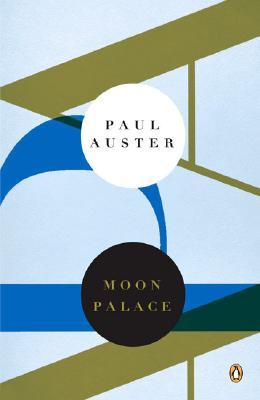
Moon Palace, Paul Auster

Moon PalaceIt was the summer that men first walked on the moon. I was very young back then, but I did not believe there would ever be a future. I wanted to live dangerously, to push myself as far as I could go, and then see what happened to me when I got there. As it turned out, I nearly did not make it. 

"Marco Stanley Fogg is an orphan, a child of the sixties, a quester tirelessly seeking the key to his past, the answers to the ultimate riddle of his fate. As Marco journeys from the canyons of Manhattan to the deserts of Utah, he encounters a gallery of characters and a series of events as rich and surprising as any in modern fiction. Beginning during the summer that men first walked on the moon, and moving backward and forward in time to span three generations, Moon Palace is propelled by coincidence and memory, and illuminated by marvelous flights of lyricism and wit. Here is the most entertaining and moving novel yet from an author well known for his breathtaking imagination."

I picked up this novel, first published in 1989, while visiting my grandparents in New York in August, and although it took me a while to get to reading Moon Palace, I wasn't disappointed. It was a really great book, amusing and saddening by turns. For some reason, I had thought that the writing would be dense or something, but it really wasn't that difficult to get into the book. I quickly read twenty five pages and really liked them.

Moon Palace is a great story; in the first part of the book, I really liked how as Marco unpacks his uncle's books from their boxes and unearths the past, so does his furniture disappear, or what he had been using at furniture. His bed, tables and chairs, and desk all start disappearing as he takes out more books. As Marco puts it, "As I sold off my books, my apartment went through many changes. That was inevitable, for each time I opened another box, I simultaneously destroyed another piece of furniture. My bed was dismantled, my chairs shrank and disappeared, my desk atrophied into empty space. My life had become a gathering zero, and it was a thing I could actually see: a palpable, burgeoning emptiness. Each time I ventured into my uncle's past, it produced a physical result, an effect in the real world. The consequences were therefore always before my eyes, and there was no way to escape them." (pg. 24).

Moon Palace is such a great mix of humor and sadness; another hilarious part of the book is when the main character (who I can never quite call Marco in my head) goes to what used to be his friend's apartment and encounters a crowd of strangers, including Kitty Wu, who will eventually save him. He has barely eaten the whole summer, and proceeds to devour their whole spread, ending by jumping into a long, outrageous soliloquy on men on the moon as early as the fifteenth century. It was really, really funny, especially the parts that were kind of sad, such as his eating every crumb on their plates except for a pile of whitefish. That's how hungry he was. Scenes and images like these are what make Moon Palace a good novel. Because Marco's story itself isn't all that interesting. It's how it's described, the writing, that makes it interesting and wonderful. Moon Palace was much better than I thought it would be, and I loved the metaphor of the Moon Palace sign and all the moon related things woven throughout the book. I also really enjoyed the character of Kitty Wu. Everything about this book is such a mix of contradictions.

There were a lot of really witty and sardonic sections in Moon Palace, too many to quote all of them. But here are a few that really had me chuckling or really resonated with me somehow. All of these are from the earlier sections of the novel. "It went on like that for the next several days. My moods charged recklessly from one extreme to another, shunting me between joy and despair so often that my mind became battered from the journey. Almost anything could set off the switch: a sudden confrontation with the past, a chance smile from a stranger, the way the light fell on the sidewalk at any given hour. I struggled to achieve some equilibrium within myself, but it was no use: everything was instability, turmoil, outrageous whim. At one moment I was engaged in a philosophical quest, supremely confident that I was about to join the ranks of the illuminati; at the next moment I was in tears, collapsing under the weight of my own anguish. My self-absorption was so intense that I could no longer see things for what they were: objects became thoughts, and every thought was part of the drama being played out inside me." (pg. 54). This was both kind of funny and deeply sad at the same time; it hurt to see the main character struggling so badly, although he's at fault for his own trials and tribulations.

Here's another one that's funny and also so true: "In the streets, everything is bodies and commotion, and like it or not, you cannot enter them without adhering to a rigid protocol of behavior. To walk among the crowd means never going faster than anyone else, never lagging behind your neighbor, never doing anything to disrupt the flow of human traffic. If you play by the rules of this game, people will tend to ignore you. There is a particular glaze that comes over the eyes of New Yorkers when they walk through the streets, a natural and perhaps necessary form of indifference to others. It doesn't matter how you look, for example. Outrageous costumes, bizarre hairdos, T-shirts with obscene slogans printed across them - no one pays attention to such things. On the other hand, the way you act inside your clothes is of the utmost importance. Odd gestures of any kind are automatically taken as a threat. Talking out loud to yourself, scratching your body, looking someone directly in the eye: these deviations can trigger off hostile and sometimes violent reactions from those around you. You must not stagger or swoon, you must not clutch the walls, you must not sing, for all forms of spontaneous or involuntary behavior are sure to elicit stares, caustic remarks, and even an occasional shove or kick in the shins. I was not so far gone that I received any treatment of that sort, but I saw it happen to others, and I knew that a day might eventually come when I wouldn't be able to control myself anymore. By contrast, life in Central Park allowed for a much broader range of variables..." Marco goes on to detail how drastically different Central Park is in terms of what's allowed.

There were a lot more, but I've gone on with that long enough. Suffice to say Moon Palace is an excellent and witty novel, filled with many unexpected coincidences. I'll probably be reading more of Paul Auster's work in the future, such as his New York trilogy.

307 pages.

Rating: *****

Saturday, September 28, 2013

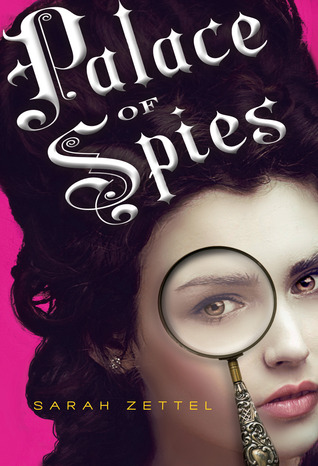
Palace of Spies, Sarah Zettel

Palace of SpiesI must begin with a frank confession. I became Lady Francesca Wallingham only after I met the man calling himself Tinderflint. This was after my betrothal, but before my uncle threw me into the street and barred the door. 

"Murder. Espionage. Card games? Peggy Fitzroy has many talents, but until recently these three were not among them. No, Peggy was merely a lively and charming young lady of the regular sort, until the day she refused to marry the utter cad chosen for her. Cast out on the street, Peggy has to find a means of support. Though it sounds rather mysterious, she agrees to disguise herself as a lady in waiting in the court of King George I. The real lady in waiting died, supposedly of natural causes. Life at the palace is grand, until Peggy starts to suspect that something dreadful happened to the girl she is impersonating. Could it have been murder? Unless Peggy can discover what really happened, she might be doomed to the same terrible fate! But in a court filled with shadows and intrigue, anyone could be a spy - perhaps even Matthew, the handsome young artist with whom Peggy is falling in love..."

Palace of Spies was a somewhat amusing and very light young adult historical fiction and mystery novel. With romance, of course. Still, I enjoyed Peggy with her snarky observations. At least in the ARC, at the beginning of each chapter there is a little caption, like "In which our heroine is wickedly confined, cruelly provoked, and commits several acts of a rash nature" and other such funny phrases.

I didn't find Palace of Spies very interesting, though. Some of the witty conversations weren't all that witty, and the intrigue wasn't all that intriguing. The author tried to bring to life the early 18th century with extensive descriptions of clothing, but it didn't really work very well. I did learn what a mantua was, and it sounds awful. Still, the descriptions could have been better. I also think a light, frivolous book like this glosses over the horrors of that time period, the abject poverty and the rampant disease.

Still, there were a few funny parts of the book, such as some of the conversations Peggy has, and the way she narrates the book and describes each character. Most of the characters were kind of uninteresting though, and didn't seem to be realistic, like the royals. Despite Palace of Spies being a light, quick read, some of the sections felt bogged down. Not much happened of note except a couple of cryptic and uninteresting conversations or exchanges of notes. Peggy was okay, but not super compelling. There were some okay parts, but I didn't enjoy the book a whole lot. It's not suspenseful at all. After about 220 pages, not much had happened; Peggy is just learning the important stuff. In fact, I have no idea how the book managed to have 220 pages cover so little. It was very weak. After that, some intrigue and deception starts coming into play, and Palace of Spies picks up a bit, as Peggy wonders who she can trust and realizes that some of the people she thought were sincere aren't.

I didn't like the romance-love triangle thing much either, although Matthew was all right, I suppose. It just wasn't very interesting (and frankly, neither was the rest of the plot). I also found it so unrealistic that all these people who knew Francesca would fail to see that Peggy is not her: the Princess of Wales, Robert, Sophy, and a whole bunch of other people who were close acquaintances of Francesca. But I suppose as Mr. Tinderflint says, people see what they expect to see and nothing more.

I'll be the first to admit that some of the issues in terms of pacing and characterization might be only in the galley; the book itself doesn't come out until early November, and in between now and then, the author might make changes. In fact, in the ARC the title is listed as A Most Dangerous Deception, which I actually like better. If the title can change, why not other parts of the book? I might have a look online at the final copy when it comes out to see if it's any different. It's certainly possible, but I still can't recommend Palace of Spies. I came in hoping for a light but entertaining, amusing, and suspenseful read. Instead, I just got something light with barely any action. The premise was interesting, but the book fell flat for me. Sometimes light reads can be a good way to pass the afternoon, sometimes you feel like you kind of wasted a bunch of your time. I felt that way with Palace of Spies. There were a few good moments, but not enough. I guess...I just didn't feel very interested in the story, and I'll probably forget the book's events within a few months (or weeks, maybe).

I received an ARC from Harcourt. Palace of Spies will be released on November 5th. 

368 pages.

Rating: **

Thursday, September 26, 2013

The Sleeping Dictionary, Sujata Massey

The Sleeping Dictionary (Daughters of Bengal, #1)You ask for my name, the real one, and I cannot tell. It is not for lack of effort.

"In 1930, a great ocean wave blots out a Bengali village, leaving only one survivor, a young girl. As a maidservant in a British boarding school, Pom is renamed Sarah and discovers her gift for languages. Her private dreams almost die when she arrives in Kharagpur and is recruited into a secretive, decadent world. Eventually, she lands in Calcutta, renames herself Kamala, and creates a new life rich in books and friends. But although success and even love seem within reach, she remains trapped by what she is . . . and is not. As India struggles to throw off imperial rule, Kamala uses her hard-won skills—for secrecy, languages, and reading the unspoken gestures of those around her—to fight for her country’s freedom and her own happiness."

The Sleeping Dictionary definitely impressed me. It's Sujata Massey's first non-mystery novel, and she did very well. I haven't read any of her earlier work, but I might now. She really brings to life India right at the most major turn in its history, from colonialism to independence, seen through the eyes of one intelligent but impoverished young woman whose real name she cannot tell for various reasons.

I enjoyed so many different aspects of The Sleeping Dictionary, from its cover to the story, to the writing, to the rich historical detail. There's scarcely a misstep in the book, and the writing just drew me in and swept me away. Massey's descriptions felt so realistic, as if she had been in the places at the times she was writing about. I enjoyed the characters too; as one reviewer says, this is indeed historical fiction at its best, with all the ingredients necessary: compelling characters and an enthralling story, historical detail, and realism, as well as a gorgeous cover (although that's neither here nor there).  I very quickly read 100 pages of the book before I knew it. It went by very quickly, but The Sleeping Dictionary is a pretty long book so don't despair; you'll have plenty of time to savor its beauty, its loveliness, its tragedy.

The way the book is organized helps make it much faster to read too; it's divided into sections that aren't too short or too long, and every part of the main character's journey and life is very interesting (at least, it was to me). I'll call her Pom, since that's the first name she remembers. I really liked Pom as a character; she's determined to succeed and despite her low caste and lack of formal education, she's really good at English and words and just learning languages in general, something most people like her can't do. After leaving Lockwood, she hopes to get a teaching position. It's not as easy as it sounds, though.

There were a lot of great secondary characters too, from the upper class girl who befriends Pom at Lockwood, to the people she meets on her way to Calcutta. I did find the tyrannical Raechal at the school a bit unrealistic. She seems to enjoy being evil just for the sake of being evil, and I don't think there are actually a whole lot of people like that. Her background story (as I'm sure she had one) just could have been fleshed out more. She wasn't that convincing, but most of the other characters were, being mixtures of good and bad like actual people.

The Sleeping Dictionary wasn't that difficult a book in terms of length, but some sections of the book were fairly disturbing in terms of subject matter, especially when Pom is in Kharagpur and is forced to work as a prostitute before being cheated out of all her savings. Once again her dreams of teaching are thwarted, but she's still not ready to totally give up.

The term "sleeping dictionary" itself comes from a nickname for Indian women who became mistresses of British colonialists and also taught them a lot about Indian culture and language, because after all, the first Western people who came to India didn't know the language.

I did find Pom's fascination with Pinkaj, who was Bidushi's fiance, a bit annoying. After all, she had exchanged letters with him (writing as Bidushi) but she never really met him, and it seemed to me unlikely that she would see him again. (Although she eventually does, of course). Overall, though, Pom's narration was convincing and compelling. She's fairly innocent, but not enough to not realize what's going on at the house in Kharagpur she arrives in after leaving Lockwood. She wants to survive and be successful, but she also has her morals, and I liked this section of her journey, where she's debating what choice to make. Throughout the book, its main character must make many difficult choices.

The Sleeping Dictionary was a rich, beautiful, and disturbing novel, which I would highly recommend to fans of historical fiction and books about India. I received a review copy from Gallery Books.

481 pages.

Rating: *****

Wednesday, September 25, 2013

The Round House, Louise Erdrich

The Round HouseSmall trees had attacked my parents' house at the foundation. They were just seedlings with one or two rigid, healthy leaves. Nevertheless, the stalky shoots had managed to squeeze through knife cracks in the decorative brown shingles covering the cement blocks. 

Summary from Goodreads: "One Sunday in the spring of 1988, a woman living on a reservation in North Dakota is attacked. The details of the crime are slow to surface as Geraldine Coutts is traumatized and reluctant to relive or reveal what happened, either to the police or to her husband, Bazil, and thirteen-year-old son, Joe. In one day, Joe's life is irrevocably transformed. He tries to heal his mother, but she will not leave her bed and slips into an abyss of solitude. Increasingly alone, Joe finds himself thrust prematurely into an adult world for which he is ill prepared. While his father, who is a tribal judge, endeavors to wrest justice from a situation that defies his efforts, Joe becomes frustrated with the official investigation and sets out with his trusted friends, Cappy, Zack, and Angus, to get some answers of his own. Their quest takes them first to the Round House, a sacred space and place of worship for the Ojibwe. And this is only the beginning."

I'd heard about The Round House a long time ago, but never got around to reading it or looking it up. I'm not sure what exactly brought it to my attention again, but I decided to pick it up, having never read any other of Louise Erdrich's novels. 

Joe's narrative voice is quite interesting, very matter-of-fact as he relates his life, though I'm not sure how realistic the descriptions of reservation life are. Some parts of the book felt a bit forced, but others really resonated, particularly towards the beginning when Joe's father prepares an awful stew, which oddly enough cheers all of them up. The story itself, despite its drama, flows along at a fairly slow, mellow pace. It reminded me a bit of Canada, a book which I didn't finish. The Round House starts off very slowly, but then it really picks up. I had difficulty getting into the book at first, and it was slow going. Still, right from the get-go, Erdrich managed to capture something hard to pin down, as well as father and son's obsession with catching the criminal, to the point that Joe's father brings the files back home, something he almost never does in a normal situation. But of course, this is not normal. I enjoyed the descriptions of the fairly petty cases that Joe's father takes on, and the interpretations of them, of the people who live in and around the reservation, white and Indian. This scene shows the tension between families in the area, without the reader actually meeting them or hearing them say anything. It was quite effective. 

In some ways, The Round House really doesn't seem like it's set in the 1980's; it could be at any time in the 20th century. Louise Erdrich writes very well, and I'm sure factually since her mother is half Ojibwe, the tribe that Joe belongs to in The Round House. I wasn't sure at first if The Round House was going to live up to all the acclaim it received, like the National Book Award and one of The New York Time's best books of 2012, but it eventually was pretty good. It just took a while. 

The Ojibwe is a little known tribe; I had certainly never heard of it before reading this book, or the sacred round house which gives this book its title and is where the crime took place. It's very ironic that such a terrible thing should occur in such a sacred place, and that is where Joe begins to investigate with his group of friends. But as the summary says, it is only the beginning, and the investigations, the official and the unofficial, will change everyone's lives. Meanwhile, Joe's mother is alive, but struggling to cope with the aftermath of what happened to her. 

Joe is a heartbreaking character, in between phases in all sorts of respects, and what happens is just a little bit more than he can handle. He thinks he can though, and he thinks he can find the attacker (as he calls him) without the help of the authorities, with only his very immature friends' help. To give you an example of that, they find a piece of "evidence" in the woods near the round house, some cans of beer, and promptly drink them. And Joe is only thirteen. It was very sad. He also hurts his parents a lot with his investigating. 

Still, The Round House was a good book, one which I would recommend. 

317 pages. 

Rating: ****

Tuesday, September 24, 2013

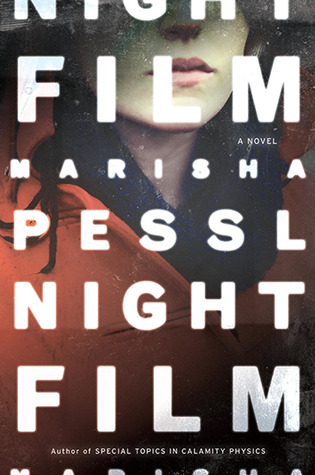
Night Film, Marisha Pessl

Night FilmEveryone has a Cordova story, whether they like it or not. Maybe your next-door neighbor found one of his movies in an old box in her attic and never entered a dark room alone again. Or your boyfriend bragged he'd discovered a contraband copy of At Night All Birds Are Black on the Internet and after watching refused to speak of it, as if it were a horrific ordeal he'd barely survived.

"On a damp October night, beautiful young Ashley Cordova is found dead in an abandoned warehouse in lower Manhattan. Though her death is ruled a suicide, veteran investigative journalist Scott McGrath suspects otherwise. As he probes the strange circumstances surrounding Ashley’s life and death, McGrath comes face-to-face with the legacy of her father: the legendary, reclusive cult-horror-film director Stanislas Cordova—a man who hasn’t been seen in public for more than thirty years. For McGrath, another death connected to this seemingly cursed family dynasty seems more than just a coincidence. Though much has been written about Cordova’s dark and unsettling films, very little is known about the man himself. Driven by revenge, curiosity, and a need for the truth, McGrath, with the aid of two strangers, is drawn deeper and deeper into Cordova’s eerie, hypnotic world. The last time he got close to exposing the director, McGrath lost his marriage and his career. This time he might lose even more. Night Film, the gorgeously written, spellbinding new novel by the dazzlingly inventive Marisha Pessl, will hold you in suspense until you turn the final page."

Night Film was an almost hypnotic read, and right from the first section, it drew me into the dark and strange story of the Cordovas. I haven't read Marisha Pessl's first book Special Topics in Calamity Physics, but I really enjoyed her second literary mystery novel. It's quite a good genre with a wide range of types. The Cuckoo's Calling, for example, was good in its own way, and Night Film was very different but amazing too. And pretty scary. 

I love how the book uses mixed media; most is written in a traditional first person narrative from McGrath's point of view, but in between those sections are emails, texts, articles, phone call records, and more, as seen on the main character's web browser.  I really liked that aspect, as it made the book seem more realistic and offered a break between the narrative. I especially enjoyed the fake newspaper articles about Ashley Cordova and her father; they were very illuminating, even though there was much more to them than what any mainstream article would say. It still added a great deal and made the book much more interesting. I was worried that this aspect of Night Film wouldn't work, but it did. 

I enjoyed the secondary characters, particularly Nora, who had a great name for a mystery novel, although it's not a very common one. All of the characters, I think, could have been more described, but it was the mysterious, disturbed Cordova I was most interested in. Some parts of his so-called philosophy and what the fake website were saying actually seemed appealing, but other parts were just disgusting. Cordova's main idea is that fear is the beginning of freedom. 

I can tell you that I certainly wouldn't want to watch any of Cordova's films, which the first paragraph mentions terrifying people so badly that they're scared of the dark forever after or refuse to speak of it. However, the film of his that his daughter was in sounded really interesting. Here's the description from page 165 in the ARC and page 143 in the final copy of Night Film: "The wealthy, corrupt Stevens family - a gorgeous clan of dissipated Caligulas living in an unnamed European country - is calculatingly butchered, one by one, confounding the police. Though the inspector assigned to the case eventually arrests a tramp who did landscaping work for the family, the movie's final hairpin twist reveals the killer is actually the family's youngest child, the mute, watchful eight-year-old Gaetana - played of course, by Ashley. By the time the inspector pieces this grisly truth together, it's too late. The little girl has vanished. The last scene shows her strolling along the side of the road, where she's picked up by a traveling family in a station wagon. In true Cordova style, it's left ambiguous if this family is destined to meet the same horrific fate as her own, or if she simply made herself an orphan so she could be raised by a happier family." Doesn't that just sound great, if horribly gruesome? It also provides Scott and his new assistant Nora with something to go on about who Ashley was, although of course that was when she was a little girl acting. There are so many threads they must investigate, but who knows which are fact and which are fiction? The Cordova family and their history is so enigmatic. 

Night Film is an engrossing and disturbing novel. Towards the latter half of it, things got a little bit bogged down, but I was always absorbed, and I was certainly glad that I got an ARC from Random House. Night Film came out August 20th. 

624 pages. 

Rating: ****

Monday, September 23, 2013

The Carpet People, Terry Pratchett

The Carpet PeopleThey called themselves the Munrungs. It meant The People, or The True Human Beings.

"In the beginning, there was nothing but endless flatness. Then came the Carpet . . . That’s the old story everyone knows and loves. But now the Carpet is home to many different tribes and peoples, and there’s a new story in the making. The story of Fray, sweeping a trail of destruction across the Carpet. The story of power-hungry mouls—and of two brothers who set out on an adventure to end all adventures when their village is flattened. It’s a story that will come to a terrible end—if someone doesn't do something about it. If everyone doesn’t do something about it . . . First published in 1971, this hilarious and wise novel marked the debut of the phenomenal Sir Terry Pratchett. Years later, Sir Terry revised the work, and this special collectable edition includes the updated text, his original color and black-and-white illustrations, and an exclusive story—a forerunner to The Carpet People created by the seventeen-year-old nascent writer who would become one of the world's most beloved storytellers."

The Carpet People was an incredibly weird little book, first published in 1971 when Terry Pratchett was a little known seventeen year old. Now, he revised it a bit, and it's coming out in November from Clarion Books, which sent me a review copy. I didn't love The Carpet People, that's for sure, and it was rather confusing at times, but there were a lot of interesting creations, and even then, Terry Pratchett knew how to write funny stories (although I haven't really read much of his work). I particularly liked the wights, who can see the past and the future (a conversation with them is rather disconcerting) and the temagant, whose gaze turns everyone to stone. But he only wants a friend. A lot of the other creatures Pratchett creates in this book are really great too, like the pones, large animals with a brain the size of a pea who are still surprisingly intelligent, with their own form of language. They also only stay around if they think you're interesting. 

The idea of the Carpet is really interesting and funny too, although it could have been fleshed out a bit more. Like, is the Carpet actually a huge realm? Is it located in a carpet in someone's home or what? If so, then how come people never get stepped on by feet? All that and more made the book very confusing as I read. So this definitely wasn't an amazing fantasy novel, although I'm sure the revisions that Pratchett put in made it better than it originally was. Still, what the reader does learn about the Carpet is pretty cool, about all the different colored-hairs and the strange creatures. I also liked the drawings that accompanied the text. They really brought the story to life. There were also a lot of very funny sequences, such as the one when the characters storm Jeopard to take it over from the mouls with only half a dozen people, when five thousand couldn't take down the city earlier. 

One thing I find lacking in many fantasy novels is the characters' lack of inclination to question what exists beyond their known world, far away and up above. In The Carpet People, they do do that, to a certain extent, wondering what's above the Carpet, and whether it ever ends. I loved that that so often left out element was included, acknowledging how humans (and other creatures) are always curious about unknown places. It's just unrealistic that in a fantasy realm where not a lot is known that a person wouldn't care at all about uncharted territories. 

Character development was a bit thin, but I ended up enjoying the book more than I thought initially. It starts out pretty slowly and confusingly, but gradually things become clearer and one is able to enjoy this rather silly story. Once I got into it, the book was a pretty quick read; at least in the ARC, the font is very big and the age range is listed as 8+ (although you should never trust those). I would recommend The Carpet People to fans of odd but good fantasy; I'm glad that a new edition was issued. I might try reading some more of Terry Pratchett's more famous works, which I've heard are very good and humorous. I have read The Wee Free Men, but I don't remember much about it except that it was weird, and not necessarily in a good way. The Carpet People was also weird...but in a good way.

289 pages. 

Rating: ****

Sunday, September 22, 2013

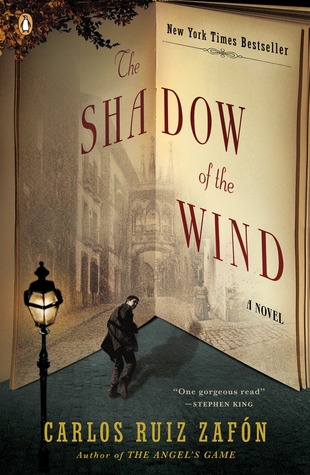
The Shadow of the Wind, Carlos Ruiz Zafon

The Shadow of the Wind (The Cemetery of Forgotten Books,  #1)I still remember the day my father took me to the Cemetery of Forgotten Books for the first time. It was the early summer of 1945, and we walked through the streets of a Barcelona trapped beneath ashen skies as dawn poured over Rambla de Santa Moninca in a wreath of liquid copper. 

"Barcelona, 1945: A city slowly heals in the aftermath of the Spanish Civil War, and Daniel, an antiquarian book dealer’s son who mourns the loss of his mother, finds solace in a mysterious book entitled The Shadow of the Wind, by one Julián Carax. But when he sets out to find the author’s other works, he makes a shocking discovery: someone has been systematically destroying every copy of every book Carax has written. In fact, Daniel may have the last of Carax’s books in existence. Soon Daniel’s seemingly innocent quest opens a door into one of Barcelona’s darkest secrets--an epic story of murder, madness, and doomed love."

I started reading this a couple of years ago, but for whatever reason put it down. I have no idea why, because almost everyone who's read The Shadow of the Wind seems to have loved it, and I was no exception. The book has such a great feel of mystery, romance, and historical detail. It also really captures a love of books that is ingrained in so many people, including me. The writing is a bit odd, but easy to lose yourself in. The Shadow of the Wind isn't a fast read, but it is an intensely absorbing one, and the story itself is fascinating and ingenious. Daniel as a protagonist isn't totally developed, but one gets just enough to understand him a little bit; besides, he's mainly a vehicle. I loved the detail of the pen that Victor Hugo reportedly used to write Les Miserables, I loved the Cemetery of Forgotten Books, and I loved this passage: "As I walked in the dark through the tunnels and tunnels of books, I could not help being overcome by a sense of sadness. I couldn't help thinking that if I, by pure chance, had found a whole universe in a single unknown book, buried in that endless necropolis, tens of thousands more would remain unexplored, forgotten forever. I felt myself surrounded by millions of abandoned pages, by worlds and souls without an owner sinking in an ocean of darkness, while the world that throbbed outside the library seemed to be losing its memory, day after day, unknowingly, feeling all the wise the more it forgot." (page 76). The language was masterful and the idea really striking too. 

There was also a lot of dark humor in The Shadow of the Wind, which I really appreciated. A lot of bad things happen in the story, but Daniel and the other characters still manage to joke, albeit in a very wry manner. Fermin, in particular, likes to make jokes, and rant. He was probably the most annoying character, but still kind of sympathetic. 

I will say that the writing in The Shadow of the Wind is kind of dense; I found myself skimming a little bit. But it's still good in a snide sort of way, and the story is just brilliant, full of all the best things: intrigue, murder, doomed love affairs, and an abiding love of literature that many of the characters share. My favorite characters are the ones we never meet (or don't know we're meeting): Julian Carax and Penelope, the two whose fates Daniel is trying to investigate. I also really liked Bea, Tomas's sister. 

The Shadow of the Wind is one of those books I really enjoyed, but for some reason don't have a whole lot to talk about. Basically, if it sounds interesting, you should pick it up. It's not very suspenseful despite the mystery element, but it is an excellent story, with stories within the story. It also takes place across a long span of time; the book starts when Daniel is ten and first visits the magical Cemetery of Forgotten Books, picking up the Julian Carax title that will forever alter his life. But much of the action takes place six years later, when after the stranger with the burned face shows up, Daniel once again starts to investigate the elusive Julian Carax in earnest. And why is this sinister stranger so bent on destroying all of Carax's books? Daniel is determined to find out, and what he does will lead him into terrible danger. I would definitely recommend The Shadow of the Wind.

487 pages. 

Rating:****