Wednesday, May 22, 2013

The River of No Return, Bee Ridgeway

The River of No ReturnJulia sat beside her grandfather's bed, holding his hand. The fifth Earl of Darchester was dying.

"Two hundred years after he was about to die on a Napoleonic battlefield, Nick Falcott, soldier and aristocrat, wakes up in a hospital bed in modern London. The Guild, an entity that controls time travel, showers him with life's advantages. But Nick yearns for home and for one brown-eyed girl, lost now down the centuries. Then the Guild asks him to break its own rule. It needs Nick to go back to 1815 to fight the Guild’s enemies and to find something called the Talisman. In 1815, Julia Percy mourns the death of her beloved grandfather, an earl who could play with time. On his deathbed he whispers in her ear: “Pretend!” Pretend what? When Nick returns home as if from the dead, older than he should be and battle scarred, Julia begins to suspect that her very life depends upon the secrets Grandfather never told her. Soon enough Julia and Nick are caught up in an adventure that stretches up and down the river of time. As their knowledge of the Guild and their feelings for each other grow, the fate of the future itself is hanging in the balance."

The River of No Return sounded like a really fascinating story, and I was happy to receive a review copy from Dutton Books. And it was really fascinating. It's one of those books that's made better by the fact that the font is really nice. Anyway, the plot of The River of No Return is very intriguing; I am fascinated by time travel, and this is a lengthy book which deals in depth with a certain interpretation of it. The way that the Guild was described was really interesting too; at times, I thought they were benevolent, at others, that they were evil and twisted. Bee Ridgeway makes the reader's opinion of everything shift back and forth, and then back again, right until the very end of the story. 

I really enjoyed the characters, but I have to say that I found Julia's story more interesting. I got kind of annoyed when the narrative shifted back to Nick. But when they met up back in 1815, the story was just as interesting. Sometimes I wasn't always fond of their relationship, but it was nice to read about them together, rather than jumping back and forth. The River of No Return is a delicious mix of so many different genres: fantasy, historical fiction, romance, mystery, thriller, and it succeeds very well in all of those genres. 

Sometimes I wished that the way time was stopped was described a bit more thoroughly. Does Julia just think about doing it and it happens? Or is there some special thing that she has to do in order to stop time? Despite being somewhat vague, I enjoyed reading about this power. I also liked visiting Jane Austen's England from a fresh perspective. 

I loved how the reader never knows who to trust, the Guild or the Ofan. As I mentioned earlier, we alternate between liking one or the other, just as Nick is unsure about his loyalties also. There are lots of other twists in the book as well that surprise both the reader and the main characters. The River of No Return is a read that will push you along with it, just like the metaphorical (or perhaps not so metaphorical) river in the book. Speaking of metaphors, the amount of them kind of annoyed me; still, a great book. 

Read The River of No Return:
  • if you like fantasy
  • if you like historical fiction
  • if you like romance
  • if you like mysteries
  • if you like thrillers
452 pages.
 
Very Good! I would recommend this book!

Tuesday, May 21, 2013

Rereading Never Cry Wolf by Farley Mowat

Never Cry WolfIt is a long way in time and space from the bathroom of my Grandmother Mowat's house in Oakville, Ontario, to the bottom of a wolf den in the Barren Lands of central Keewatin, and I have no intention of retracing the entire road which lies between. Nevertheless, there must be a beginning to any tale; and the story of my sojourn amongst the wolves begins properly in Granny's bathroom.

"More than a half-century ago the naturalist Farley Mowat to investigate why wolves were killing arctic caribou. Mowat's account of the summer he lived in the frozen tundra alone -- studying the wolf population and developing a deep affection for the wolves (who were of no threat to caribou or man) -- is today celebrated as a classic of nature writing, at once a tale of remarkable adventures and indelible record of myths and magic of wolves."

I'd of course read this book before, but not for a long time, so I wanted to revisit it. It's an amazing work of writing in many ways. At the time, it was ground-breaking, but it is still entertaining for those who already know that wolves are not the vicious, savage creatures that they were once thought to be. They're quite the contrary, and this book reveals that. Mowat's observations of the wolves and their behavior is fascinating, entertaining, and extremely important. I do think that some of what Mowat tells of might be fictitious, but the message is true, and probably he wrote down what basically happened to him. What did annoy me was that on the front cover, the book is described as "the amazing true story of life among Arctic Wolves", which automatically makes the reader doubt the book's authenticity. That really could have been left out. But unlike Mutant Message Down Under, Never Cry Wolf is, I think, a work of nonfiction. Though I'd be curious to know other opinions, or if there's anything in the book that is clearly fiction. 

In his introduction, Mowat mentions that he initially intended the book to be a satire of sorts - a satire of bureaucracy and government, but then the book turned into much more. It turned into a defense of wolves. But some of that satirical humor still definitely shines throughout the book. Mowat is given detailed instructions about his mission, all of which are utterly senseless and turn out to have no practical bearing whatsoever. He also writes with humor about his first encounters with the wolves, and having his ego taken down a notch. 

In other words, Never Cry Wolf is a fascinating book in many respects. The science element of it isn't difficult to understand, and great for a layman. There's also humor, and wonderful description. The sad thing is that even today, more than half a century after this work was published and more research has supported it, is that many people still view wolves as bloodthirsty killers, who maliciously kill caribou. Guess what? The only animal as far as I know that kills things for fun quite frequently is humans. We're the bloodthirsty killers, not the wolves. I think part of it is that in most fairy tales, the wolf is the villain: "The Three Little Pigs", "Red Riding Hood", "The Boy Who Cried Wolf" and many, many more. So right from when we're children, we learn that wolves are evil, which is absolutely untrue. It's awful. I'm going to stop my rant now. 

At any rate, Never Cry Wolf is a must-read; it's funny, entertaining, and groundbreaking. I would highly recommend it. 

Read Never Cry Wolf:
  • if you like science writing
  • if you like wolves
246 pages. 
 
Very Good! I would recommend this book!

Monday, May 20, 2013

ARCs That I Want Really Badly

The title is kind of self-explanatory.

Crown of Midnight (Throne of Glass, #2)This is the sequel to Throne of Glass, and hopefully (maybe) I'll be able to get an ARC. Sadly, the cover does not match that of the first book.


Allegiant (Divergent, #3)No ARCs of Allegiant, unfortunately. But I'm very excited.

Across a Star-Swept Sea (For Darkness Shows the Stars, #2)Based upon The Scarlet Pimpernel, this one is coming out in October, I believe.


The Ocean at the End of the LaneNeil Gaiman's latest looks very good. Coming out in June.


TransAtlanticI loved Let the Great World Spin, so I'm also looking forward to this.

Hopefully I'll be able to get ARCs of some of these great books.

Sunday, May 19, 2013

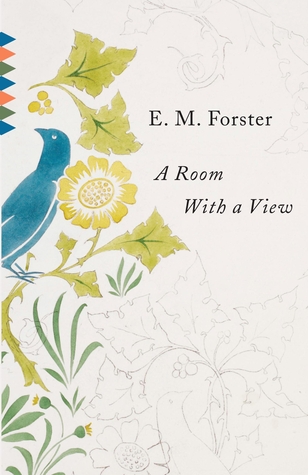
A Room With a View, E.M. Forster

A Room with a View'The Signora had no business to do it,' said Miss Bartlett, 'no business at all. She promised us south rooms with a view, close together, instead of which here are north rooms, here are north rooms, looking into a courtyard, and a long way apart. Oh, Lucy!'

"First published in 1908, A Room with a View portrays the love of a British woman for an expatriate living in Italy. Caught up in a world of social snobbery, Forster's heroine, Lucy Honeychurch, finds herself constrained by the claustrophobic influence of her British guardians, who encourage her to take up with a well-connected boor. In the end, however, Lucy takes control of her own fate and finds love with a man whose free spirit reminds her of 'a room with a view.'" It's also described as the most optimistic and romantic of Forster's novels. 

I enjoyed A Room With a View, and although it's not as good as most Austen, it was an excellent novel. It was very chatty; there was lots and lots of dialogue in the book. The characters talk and talk about everything that happens. It was a bit off-putting, but I enjoyed the writing and the story. The characters didn't exactly come to life for me, but they certainly were interesting. I enjoyed the character of old Mr. Emerson, especially when he berates some of the other people on the carriage ride. I'm not exactly sure when A Room With a View is set, but suffice to say, the two Mr. Emerson's are both very progressive for their time.

Unlike in Northanger Abbey, the difference between Mr. Emerson and the "well-connected boor" is not so obvious at first. When the reader first meets Cecil, the boor, he doesn't seem that bad, though not quite right for Lucy either. This makes the book and the romance much more subtle. Cecil is certainly a very interesting character, not bad exactly, but inclined to loath everyone. Emerson describes him very well on pages 190-191. Some of the middle sections dragged a bit and were a little confusing, but I ended up really loving A Room With a View. It's a very subtle but brilliant book.

Overall, the writing in A Room With a View was very compelling; I look forward to reading Howard's End too. There's a great list here of what to read when you've finished Jane Austen, and A Room With a View is most justly on it. It's an excellent and thought-provoking book, one that I would highly recommend. There are lots of interesting character sketches, and the plot is quite good, though E.M. Forster is a bit sexist.

Read A Room With a View:
  • if you like E.M. Forster
  • if you like Jane Austen
  • if you like British literature
242 pages.
 
Very Good! I would recommend this book!

Does anyone know when A Room With a View is supposed to be set? 

Saturday, May 18, 2013

Unnatural Creatures: Stories Selected by Neil Gaiman

Unnatural Creatures: Stories Selected by Neil GaimanThe first time Reginald Archer saw the thing, it was, in its simplicity, absolute. It owned not the slightest complication or involvement. It lacked the tiniest, the remotest, the most insignificant trace of embellishment.

"A griffin, a werewolf, a sunbird . . .These are just some of the fantastical creatures you'll encounter within these pages. From the cockatoucan, whose laugh rearranges an entire kingdom, to the roving shapeless Beast that lurks in a forest, herein is a collection of rare and magnificent species. Each one will thrill, delight, and quite possibly unnerve you. Selected by master storyteller Neil Gaiman, the sixteen stories in this menagerie will introduce you to a host of strange, wondrous beings that have never existed anyplace but in the richness of the imagination.With stories from Neil Gaiman, Diana Wynne Jones, E. Nesbit, and many more." I do think the way the book is described is a bit misleading. I was under the impression that the stories would be all new ones written for this collection. But the majority of them have been published before. One, "The Griffin and the Minor Canon", I'd even read before! But the stories are still really good. I was pleasantly surprised to find a paperback edition even though the book had just come out. I think the hardcover and the paperback were released simultaneously, which is unusual. 

As with any short story collection, there are some great stories, some good ones, and some that just didn't work for me. The first one was very fun. Its title is very difficult to say (you'll see why if you read the book). There's a story about bees rebelling against wasps, a girl in an African village who can talk to snakes, an epicurean society looking for new subjects and more. The one about the epicurean society, "Sunbird", is written by Neil Gaiman. The other authors in the collection are Peter S. Beagle, Anthony Boucher, Avram Davidson, Samuel R. Delaney, Maria Headley, Nalo Hopkinson, Diana Wynne Jones, Megan Kurashige, E. Nesbit, Larry Niven, Nnedi Okorafor, Saki, Frank R. Stockton, and E. Lily Yu. Diana Wynne Jones's story has Chrestomanci in it. He appears in many of her books. 

None of the beginning stories thrilled me, but I did really enjoy "Gabriel-Ernest" by Saki. It was an excellently chilling story.  "The Cockatoucan" was also excellent, very British and very entertaining. In the later sections of the book there were a lot of other good stories, making Unnatural Creatures very enjoyable and definitely worth reading. Other ones that I liked were "Prismata" and "Come Lady Death".

Read Unnatural Creatures:
  • if you like Neil Gaiman or any of the other authors
  • if you like short stories
  • if you like fantasy
  • if you like stories of strange creatures 
455 pages.
 
Very Good! I would recommend this book!

Friday, May 17, 2013

The Eternal Ones, Kirsten Miller

The Eternal OnesHaven was back. She glanced across the familiar little room. Silver clouds hovered over the skylight high above a rumpled bed. A candle sat on the edge of the vanity, waiting for the sun's weak rays to finally fade.

"Haven Moore has always lived in the town of Snope City, Tennessee. But for as long as she can remember, Haven has experienced visions of a past life as a girl named Constance, whose love for a boy called Ethan ended in fiery tragedy. One day, the sight of notorious playboy Iain Morrow on television brings Haven to her knees. Haven flees to New York City to find Iain and there, she is swept up in an epic love affair that feels both deeply fated and terribly dangerous. Is Iain her beloved Ethan? Or is he her murderer from a past life? Haven asks the members of the powerful and mysterious Ouroboros Society to help her unlock the mysteries of reincarnation and discover the secrets hidden in her past lives, and loves, before all is lost and the cycle begins again. But what is the Ouroboros Society? And how can Haven know whom to trust?" 

The plot of this one sounds annoyingly YA-romancy, and the cover is hideous, but Kirsten Miller is the author of the Kiki Strike series, which I love, so I gave this one a try. And I wasn't disappointed.The Eternal Ones wasn't quite as good as the first two books in the Kiki Strike series, but it was better than The Darkness Dwellers, and was really suspenseful. Although it's different, once I started, I couldn't put it down. 

The characters are all interestingly portrayed. The cruelty of Haven's grandmother is shown so well, and I was really furious at the way she was treated in Snope City. Haven's mother loves her, but she's never been quite the same after Haven's dad died, and she can't stand up for Haven. It's a really bad situation. I also wanted to learn more about the enigmatic Ethan/Iain and what had really happened. It did take a while for Haven to actually get to New York, and I think the beginning sections could have been tighter, but the book was still good. All of Part 1 is set in Tennessee, 147 pages or so.
 
I loved Part 1, but Part 2 kind of annoyed me. Haven started acting really stupidly, just blindly trusting Iain, which was really not a good idea, considering the fact that he was a notorious playboy and she had been warned by someone to avoid people who seem to know too much about her. I realize that they were in love in a past life, but I feel like Haven still should have proceeded with more caution. And plus, Iain bosses her around too much, and she just takes it. She really did a lot of stupid things in New York, and she kept going back and forth about whether she was in love with Iain or whether he was a psycho. It seemed obvious to me that he was a real jerk, even if he was just trying to protect Haven. 

What I did like about The Eternal Ones is that certain elements of it are based upon the author's own life. She lived in a small North Carolinian town, and when she was seventeen, she went to New York City and lives there still. I have no idea what her parents were like, but the dedication to The Eternal Ones reads thus: "FOR MY PARENTS- if not my first, then certainly the best." It's very enigmatic. 

I didn't love the two main characters, but I did love the writing and the plot, which made up for Haven being somewhat annoying. This is certainly a fascinating novel, and well worth a try, although it's not as good as Kiki Strike or How to Lead a Life of Crime. I did like the subject matter. 

Read The Eternal Ones:
  • if you like Kirsten Miller
  • if you like books about reincarnation
  • if you like books set in Tennessee or New York
411 pages.
 
Very Good! I would recommend this book!

Thursday, May 16, 2013

Midnight's Children, Salman Rushdie

Midnight's Children
Midnight's ChildrenI was born in the city of Bombay...once upon a time. No, that won't do, there's no getting away from the date: I was born in Doctor Narlikar's Nursing Home on August 15th, 1947. And the time? The time matters, too. Well then: at night. No, it's important to be more...On the stroke of midnight as a matter of fact. Clock-Hands joined palms in respectful greeting as I came. Oh, spell it out, spell it out: at the precise instant of India's arrival at independence, I tumbled forth into the world. 

"Saleem Sinai is born at the stroke of midnight on August 15, 1947, the very moment of India’s independence. Greeted by fireworks displays, cheering crowds, and Prime Minister Nehru himself, Saleem grows up to learn the ominous consequences of this coincidence. His every act is mirrored and magnified in events that sway the course of national affairs; his health and well-being are inextricably bound to those of his nation; his life is inseparable, at times indistinguishable, from the history of his country. Perhaps most remarkable are the telepathic powers linking him with India’s 1,000 other “midnight’s children,” all born in that initial hour and endowed with magical gifts. This novel is at once a fascinating family saga and an astonishing evocation of a vast land and its people–a brilliant incarnation of the universal human comedy."

Midnight's Children was Salman Rushdie's first novel, which I somehow haven't read yet. I really enjoyed it. Like many of Rushdie's novels, it was a bit hard to get into, but I loved the writing and the plot. The book is woven so skillfully. Salman Rushdie does like to beat around the bush and never get to the point, which is infuriating but effective. Saleem talks to the reader directly, breaking off and having emotional crises. He's also constantly interrupted by his wife, and he stops and starts. In short, the reader is annoyed but also absorbed. 


The story itself is amazing, describing India so well. At least, I think it does, and it's certainly an excellent novel. There are tragedies and comedies that unfold, funerals and weddings, all in a mix between fantasy and reality. It's hard to define Midnight's Children in a specific genre; it could be called magic realism, I suppose, but it could also be called historical fiction. It's kind of a mix of the two. 

Midnight's Children is a long but brilliant novel, definitely one of my favorites of the Rushdie novels I've read (although admittedly I haven't read that many). The descriptions of the magic powers endowed to the children of midnight were amazing, once the narrator finally got around to them after over 200 pages. In that respect Midnight's Children kind of reminded me of One Hundred Years of Solitude; it is many, many pages before Saleem finally gets to his birth, just as it is many many pages before Marquez tells of the ice. So infuriating! 

One of the really infuriating things about Midnight's Children was all the foreshadowing. Saleem drops hints about these huge events that are going to happen, leaving the reader exasperated, guessing and waiting. And by important events, I mean events that will change the characters' lives and the whole country. There are also a lot of great metaphors that Salman Rushdie uses; for example that of snakes and ladders. For every ladder, there will always be a snake around the corner, and vice versa, but as Saleem observes, "The game lacked one crucial dimension, that of ambiguity - because, as events are about to show, it is possible to slither down a ladder and climb to triumph on the venom of a snake..." (pg. 161). Speaking of snakes, it always annoys me how people demonize snakes. There are many, many snakes which aren't poisonous at all, and if they do bite people, it's just because they're looking out for their own interests, just like everyone else. But that has nothing to do with Midnight's Children (at least, I don't think it does).

There were parts of Midnight's Children that I didn't love, but there were also parts that were really slyly funny, and a joy to read. Overall, I thoroughly enjoyed it.
 
Read Midnight's Children:
  • if you like Salman Rushdie
  • if you like magic realism
  • if you like historical fiction
  • if you like books set in India
533 pages, 4 stars.